
Side Dishes
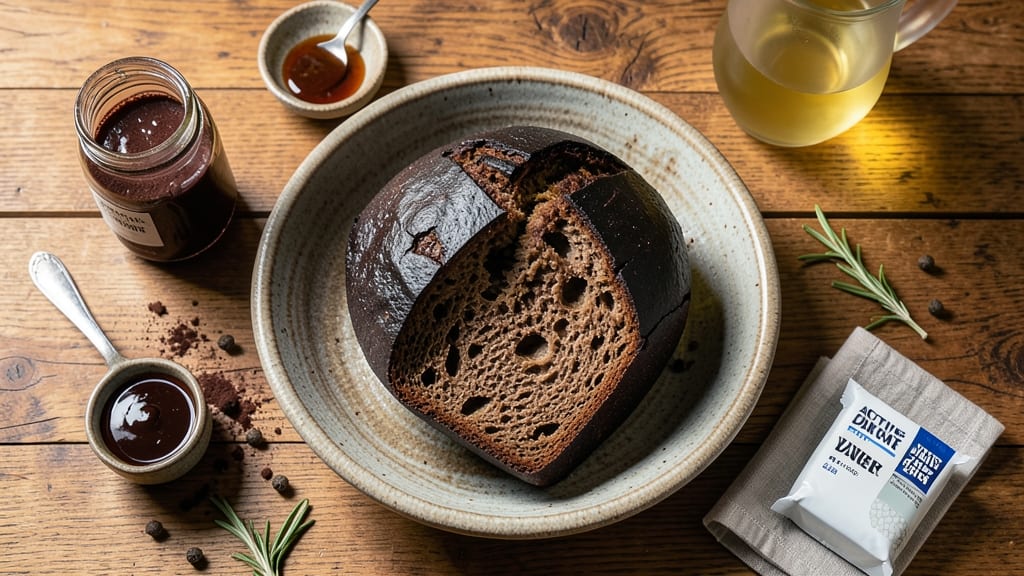
This authentic German pumpernickel bread delivers the deep molasses notes and nutty rye flavor that make it a staple in German households. The secret lies in a long fermentation—at least 12 hours—that develops complex flavors and creates that signature dense, slightly sweet texture.
I’ve perfected this recipe after years of testing, ensuring every slice captures the heart of traditional German baking without shortcuts.
The dough combines dark rye flour, molasses, and a touch of honey for balanced sweetness, while a slow bake in a covered Dutch oven traps steam for an even crumb.
No eggs or dairy are needed—just whole grains, water, and time to create a loaf that’s hearty enough for breakfast or substantial enough for dinner. The crust develops a rich, dark color from the molasses, while the interior stays moist and tender.
What sets this recipe apart is the patience required: letting the dough ferment overnight allows the flavors to deepen and the gluten to relax, resulting in a loaf that’s easier to slice and packed with flavor.
The aroma alone—warm, spiced, and slightly caramelized—will transport you to a German bakery. This is bread that deserves to be the centerpiece of your table.
Perfect for sandwiches, toast, or served alongside hearty stews, this pumpernickel keeps well for up to a week when wrapped tightly. The longer it sits, the more the flavors meld, making each slice even more rewarding. Let’s get started on a loaf that tastes like tradition.
Ingredients for authentic german pumpernickel bread
These whole-grain ingredients blend into a loaf that tastes like German tradition.
| Ingredient | Amount | Notes |
|---|---|---|
| Dark Rye Flour 🌾 | 4 cups | For authentic German flavor |
| All-Purpose Flour 🌾 | 1 cup | Balances rye density |
| Molasses 🍯 | ¾ cup | Unsulphured for best flavor |
| Honey 🍯 | ¼ cup | For balanced sweetness |
| Active Dry Yeast 🍞 | ½ tsp | Or 1 packet instant yeast |
| Warm Water 💧 | 1 ½ cups | 105-115°F for activation |
| Salt 🧂 | 1 ½ tsp | Diamond Crystal preferred |
| Ground Cinnamon 🌿 | ½ tsp | For subtle warmth |
| Ground Cloves 🌶️ | ¼ tsp | Freshly ground preferred |
| Black Peppercorns 🌶️ | ½ tsp | Crushed lightly |
| Olive Oil 🫒 | 2 tbsp | For dough elasticity |
The dark rye flour is the soul of this bread—King Arthur or Bob's Red Mill are my go-tos for that deep, nutty flavor. If you can't find dark rye, rye flour plus 1 tbsp molasses gets you close. The molasses? Unsulphured is key—it’s sweeter and less bitter. I always grab mine from Trader Joe's or the baking aisle at Whole Foods. The spices? Penzeys sells pre-ground cloves and peppercorns that are perfect for this. Toast them lightly in a dry pan for 30 seconds before adding to the dough—it deepens their flavor instantly.
No molasses? Maple syrup plus 1 tsp vinegar mimics the depth, though it won’t be identical. Short on cloves? Allspice at double the amount works in a pinch. The yeast is non-negotiable—fresh is best, but instant yeast in the same amount works too. For the flours, sift them together to avoid lumps. The olive oil adds tenderness, but if you’re avoiding it, applesauce at half the amount keeps the dough soft. Pro tip: measure your flours by weight if you have a kitchen scale—cups vary wildly between brands.
This dough is a patient one—ferment overnight for maximum flavor. Store it in a covered bowl at room temp or in the fridge for up to 3 days if you need to slow it down. The baked loaf keeps beautifully wrapped in a towel-lined bag for 5-7 days at room temp, or frozen for 3 months. Slice it thin—this bread is dense, so sharp serrated knives are a must. The longer it sits, the better it gets. Trust me, the second day is when it truly shines.
Why You'll Love This Recipe
- No-Knead Magic: This dough comes together in five minutes—just mix, rest, and bake. No stand mixer, no fancy techniques, just the yeast doing all the work while you sip coffee.
- Molasses-Kissed Depth: That rich, caramelized molasses and honey blend? It’s like a slow-cooked flavor bomb. One bite and you’ll understand why Germans bake this for holidays—it’s that good.
- Weeknight Workhorse: Slice it for sandwiches, toast it for breakfast, or pack it for lunch. Honestly, I’ve even used it to soak up gravy. The dark rye keeps it hearty, so it never feels like a waste.
- Budget-Friendly Staple: A single loaf lasts my family over a week—way cheaper than buying artisanal bread daily. Plus, the rye flour is shelf-stable, so you’re not scrambling for last-minute swaps.
Step-by-step instructions for authentic German pumpernickel bread
Here's how to craft the perfect dark, molasses-rich loaf with deep German roots.
Mix the Wet Ingredients for Optimal Fermentation
In a large mixing bowl, combine the 1.5 cups warm water with the 0.75 cup molasses and 0.25 cup honey. Stir until fully dissolved—this creates a syrupy base that will feed the yeast and develop rich flavors. The water should be between 105-115°F to activate the yeast without killing it. If it's too hot, let it cool slightly before proceeding.
Next, add the 0.5 tsp active dry yeast and let it sit for 5-10 minutes until it begins to foam. This foam confirms the yeast is alive and ready to work. If no bubbles form after 10 minutes, your yeast may be dead—start over with fresh yeast. While waiting, crush the 0.5 tsp black peppercorns lightly with a mortar and pestle or rolling pin to release their aromatic oils.
Combine Dry Ingredients and Form the Dough
In a separate bowl, whisk together the 4 cups dark rye flour, 1 cup all-purpose flour, 1.5 tsp salt, 0.5 tsp ground cinnamon, 0.25 tsp ground cloves, and the crushed peppercorns. The dark rye flour gives that signature dense texture and deep color, while the all-purpose flour helps balance the dough's density. Sift the dry ingredients lightly to aerate them before mixing.
Make a well in the center of the dry ingredients and pour in the yeast mixture along with the 2 tbsp olive oil. Using a wooden spoon or dough whisk, gradually incorporate the liquids into the dry ingredients until a shaggy dough forms. The olive oil adds elasticity to the dough, preventing it from becoming too dense. Once combined, turn the dough out onto a lightly floured surface and knead for 8-10 minutes until smooth and elastic.
First Rise for Flavor Development
Shape the dough into a ball and place it in a lightly oiled bowl, covering it with a damp kitchen towel or plastic wrap. Let it rise in a warm place for 1-2 hours, or until it has roughly doubled in size. The warm environment helps the yeast work efficiently, but don't rush this step—proper fermentation is key to authentic flavor. You'll know it's ready when the dough springs back slowly when poked with a finger.
After the first rise, punch down the dough to release any air bubbles. This step helps develop gluten structure and ensures an even texture in the final loaf. Divide the dough into two equal portions and shape each into a 10-inch round loaf, placing them seam-side up in two greased 9x5-inch loaf pans. Cover the pans with damp towels and let them rise again for 30-45 minutes until they've expanded slightly above the pans.
Bake for Deep, Molasses-Kissed Perfection
Preheat your oven to 350°F. Bake the loaves for 45-50 minutes, until the tops are deep brown and a toothpick inserted into the center comes out clean. The molasses will caramelize during baking, creating that signature dark crust and rich, nutty flavor. If the tops brown too quickly, tent the pans with aluminum foil to prevent over-browning while ensuring the interior cooks through.
For an even deeper flavor, brush the tops of the loaves with a little warm water just before baking. This creates a glossy finish and enhances the molasses aroma. Let the bread cool in the pans for 10 minutes before transferring to a wire rack. The cooling process is crucial—it allows the internal structure to set properly, preventing a gummy texture.
Rest and Slice for Maximum Enjoyment
Once cooled, wrap the loaves in a clean kitchen towel and store them in an airtight container at room temperature for up to 3 days. For longer storage, freeze the loaves for up to 3 months. When ready to serve, slice the bread thinly with a sharp serrated knife—this is where the magic happens. The interior should be dense, moist, and packed with deep molasses flavor, while the crust remains firm and slightly sweet.
This bread pairs beautifully with sharp cheeses, smoked meats, or simply slathered with butter. The long fermentation process and molasses infusion create a loaf that's far more complex than store-bought versions. Enjoy the fruits of your labor—authentic German pumpernickel at its finest.
Pro Tips For Making Authentic German Pumpernickel Bread
- Bloom the Yeast Cold: Skip the warm water—mix your yeast with cold milk or buttermilk instead, then let it sit 10-15 minutes until bubbly. I learned this the hard way when my yeast died in hot water, and the bread turned dense. The cold blooming also keeps the molasses from overactivating the yeast too fast.
- Soften the Molasses First: Warm the molasses in a small saucepan for 2-3 minutes until it’s pourable—this prevents clumps in your dough. I used to just dump it in raw, and it made the texture uneven. A spoonful of honey helps too, but don’t skip this step if you want that classic chewy crumb.
- Knead Until Silky: Work the dough for at least 10 minutes by hand (or 5-6 on a stand mixer) until it’s smooth and elastic—rye dough fights back, but don’t quit. My first batch was gummy because I stopped too soon. The all-purpose flour helps, but you still need to earn that stretch.
- Steam the Loaf: Place a metal tray with boiling water in the oven before baking, then cover the loaf with foil for the first 20 minutes. This mimics a brick oven’s steam and gives you that deep, dark crust without burning the outside. I skipped it once—don’t make that mistake.
Best sauces and condiments for this authentic german pumpernickel bread
Classic German Spreads
Nothing complements pumpernickel like butter—I mean real butter, not margarine. A simple salted butter spread with a pinch of freshly cracked black pepper brings out the molasses depth.
For something richer, try herbed butter by mixing softened butter with 1 tsp chopped fresh dill and ½ tsp lemon zest. The acidity cuts through the sweetness beautifully. 🧈
Sweet Pairings
German tradition pairs pumpernickel with apfelmus (applesauce) or quark (a tangy fresh cheese). For a modern twist, I love whipped goat cheese with a drizzle of local honey—the creaminess contrasts perfectly with the bread's density.
Another winner is dark chocolate spread like Nutella or homemade hazelnut chocolate, especially if you're serving it to kids (or adults with sweet tooths!).
Savory Toppings
For a hearty meal, top slices with smoked salmon and crème fraîche, or corned beef with mustard for a classic Reuben-style sandwich. I also adore avocado mash with flaky sea salt and red pepper flakes—the creaminess balances the bread's robust flavor.
For a vegetarian option, try roasted red peppers and feta cheese with a drizzle of olive oil.
Molasses-Based Condiments
Since molasses is the star of pumpernickel, why not double down? Spread molasses-glazed walnuts (toss chopped walnuts with 2 tbsp molasses and 1 tsp cinnamon, then bake at 300°F for 10 minutes) for crunch.
Another idea: molasses mustard by mixing 2 tbsp Dijon mustard with 1 tbsp molasses and 1 tsp apple cider vinegar. It’s the perfect tangy-sweet companion. 🍯
Cheese Pairings
German cheeses like Limburger or Tilsiter are classic, but don’t overlook aged Gouda or sharp cheddar. For a lighter option, ricotta cheese with a sprinkle of toasted pine nuts and honey creates a sweet-savory balance.
Pro tip: Let the cheese sit at room temperature for 30 minutes before serving to enhance its flavor. The contrast of creamy cheese against the bread’s dense texture is pure magic.
Nutrition facts
Frequently asked questions
Why does authentic German pumpernickel need such a long fermentation?
The 12+ hour fermentation is key for developing that signature deep, nutty flavor and dense texture. This slow process allows the molasses and rye flour to meld completely, creating complex caramelized notes that store-bought versions miss. Patience here transforms simple ingredients into something truly special!
Can I make this without molasses? What substitutes work best?
Yes! For a similar depth, use maple syrup plus 1 tsp vinegar or dark brown sugar dissolved in water. The molasses gives pumpernickel its signature sweetness and moisture, so substitutions may make the bread slightly less dense. If you skip it, reduce the honey to 1 tbsp to balance sweetness.
How do I know when the dough is properly fermented?
Look for two signs: the dough should double in size and have a slightly jiggly, airy texture when poked gently. It should also smell sweet and yeasty—not sour or flat. If it rises too quickly (under 1 hour), your kitchen may be too warm; move it to a cooler spot. Proper fermentation is worth the wait!
Why does my pumpernickel turn out too dense or gummy?
This usually happens from over-kneading or under-fermenting. Knead just until smooth (8-10 minutes), and ensure the dough ferments fully. For extra tenderness, brush the baked loaf with molasses glaze (mix 2 tbsp molasses + 1 tbsp water) before cooling. The long bake time helps dry the interior slightly for a better crumb.
What’s the best way to store leftover pumpernickel?
Wrap cooled loaves tightly in a clean kitchen towel inside an airtight container to prevent drying. At room temperature, it stays fresh for 5-7 days. For longer storage, freeze slices wrapped in plastic for up to 3 months. The longer it sits, the more the flavors develop—second-day slices are often the best!