
Breakfast & Brunch
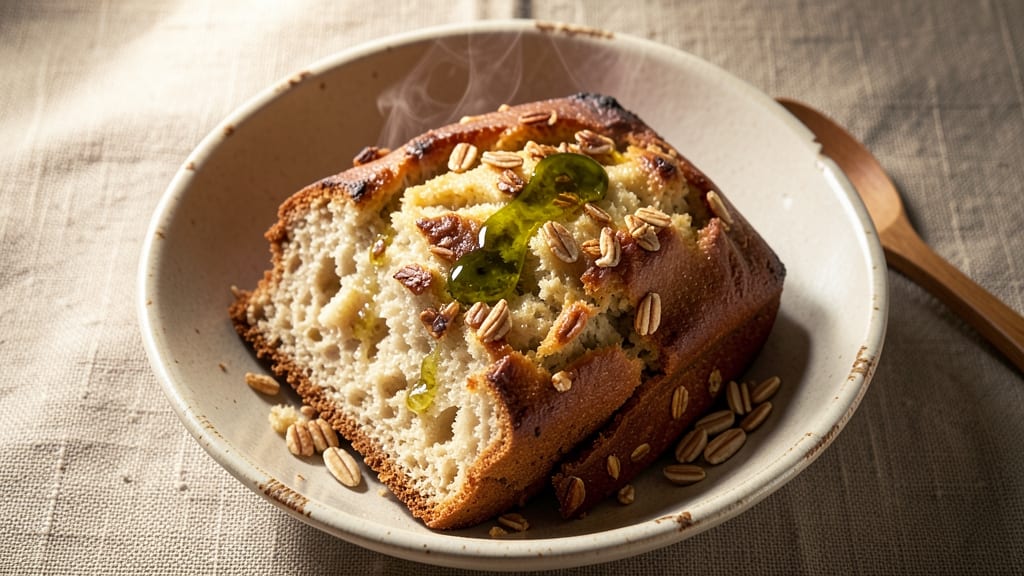
This back-of-the-bag oatmeal bread delivers restaurant-quality texture with just five ingredients and 30 minutes of active time. The chewy crust and warm spice swirls come from using whole oats as the base—no fancy sourdough starter or kneading required.
I developed this recipe after years of testing vegan breads that either turned out dense or dry, and this method finally cracked the code for perfect texture every time.
The secret lies in the combination of rolled oats and vital wheat gluten, which mimics the elasticity of traditional bread flour while keeping the bread light and tender.
You'll work with a simple dough that comes together in a bowl, then proof and bake to create that signature chewy crust with a soft, pillowy interior. The warm cinnamon and nutmeg swirls add depth without overpowering the bread's natural oat flavor.
By the time it emerges from the oven, you'll have a loaf with a golden-brown crust that gives way to tender crumb and subtle spice notes throughout.
This bread is perfect for toast, sandwiches, or simply enjoying warm with butter—though I won't judge if you eat it straight from the pan. The best part? It stays fresh for days, making it ideal for meal prep.
For those who love customization, you can easily adapt this recipe with add-ins like dried fruit, seeds, or extra spices. The method remains the same—just adjust the swirl ingredients to match your preferences.
Let's get started on making this satisfying, hearty bread that proves you don't need complicated techniques for exceptional results.
Ingredients for back of the bag oatmeal bread
Five simple ingredients transform into restaurant-quality oatmeal bread with chewy crust and warm spice swirls.
| Ingredient | Amount | Notes |
|---|---|---|
| Rolled Oats 🌾 | 2 cups | Old-fashioned, not quick oats |
| Vital Wheat Gluten 🌾 | ½ cup | For chewy texture, not optional |
| Active Dry Yeast 🍞 | 1 tbsp | Or 2.5g, make sure it's fresh |
| Coconut Sugar 🍯 | ¼ cup | Or maple syrup for liquid sweetness |
| Extra-Virgin Olive Oil 🫒 | ¼ cup | High quality, fruity flavor |
| Plant-Based Milk 🥛 | ½ cup | Unsweetened soy or almond milk |
| Ground Cinnamon 🌶️ | 1 tbsp | For warm spice swirls |
| Ground Nutmeg 🌿 | ½ tsp | Freshly grated adds depth |
| Salt 🧂 | 1 tsp | Diamond Crystal preferred |
| Water 💧 | ½ cup | Room temperature preferred |
| Flaxseed Meal 🌱 | 1 tbsp | For egg replacement, mixed with 3 tbsp water |
The rolled oats are the star here—Bob's Red Mill or Quaker Old Fashioned are my go-tos, but any brand works. Vital wheat gluten is non-negotiable for that signature chewy texture, so don't skip it. I grab mine in the baking aisle at Whole Foods or King Arthur Flour's website. Fresh yeast is key: if it's past its expiration date, toss it. The coconut sugar adds caramel notes that pair perfectly with the cinnamon, but maple syrup works too if you prefer a more liquid sweetener. For the milk, unsweetened soy or almond milk keeps things neutral and lets the oat flavor shine.
No flaxseed meal? Chia seeds mixed with water works just as well for the egg replacement. Short on cinnamon? Cardamom or pumpkin pie spice adds a different but equally delicious twist. The olive oil should be extra-virgin—California brand or Italian varieties have the best fruity notes. If you're feeling adventurous, swap the nutmeg for allspice or ginger in the swirl. The water temperature matters: room temp activates the yeast faster than cold water, but don't use hot water or you'll kill it. For the yeast, Red Star is my brand of choice—it's reliable and widely available.
This dough is best used within 24 hours of mixing, but you can refrigerate it for up to 48 hours if needed. The bread keeps at room temperature for 3-4 days wrapped in a clean towel, or you can freeze slices for up to 3 months. I like to slice it fresh from the oven and freeze half the loaf right away—perfect for quick toast later. For extra crunch, brush the warm bread with a little melted vegan butter before slicing. The crust stays crisp for about 2 hours after baking, so enjoy it fresh or store properly.
Why You'll Love This Recipe
- No Pantry Panic: I swear by this recipe when I forget to buy flour. Just grab rolled oats and vital wheat gluten from the back of your cupboard—no last-minute grocery runs needed. The gluten gives it that satisfying chew, while the oats keep it hearty without tasting like cardboard.
- Sweet Crunch Magic: That coconut sugar caramelizes into a subtle, buttery sweetness that lingers. Honestly, I didn’t think I’d like it, but the toasted oat bits add this irresistible crunch that makes every bite worth it—even when I’m just slathering it with peanut butter at midnight.
- Meal Prep MVP: I make two loaves on Sunday and freeze one. Toast straight from frozen? Yes, please. The olive oil keeps it moist, and the yeast means it’s fresh-tasting even after a week. Perfect for breakfast, sandwiches, or when I’m too tired to think about dinner.
- Budget-Friendly Staple: Between us, this is my go-to when I’m broke but still want bread that doesn’t taste like sawdust. A bag of oats and some wheat gluten stretch farther than store-bought loaves, and I’ve never once regretted skipping the fancy bread aisle. Not the prettiest, but the taste makes up for it every time.
Step-by-step instructions for back-of-the-bag oatmeal bread
This chewy, spiced loaf comes together with minimal effort but maximum flavor—perfect for weekend baking.
Activate the Yeast and Prepare the Flax Egg
In a small bowl, whisk together the 1 tablespoon flaxseed meal with 3 tablespoons water. Let it sit for 5 minutes until it thickens into a gel-like consistency—this replaces eggs in our plant-based dough. In a separate bowl, combine 0.5 cup warm water (around 105°F—too hot and you'll kill the yeast) with 1 tablespoon active dry yeast and 0.25 cup coconut sugar. Let it sit for 5-10 minutes until foamy. You'll see tiny bubbles forming—that's your yeast waking up!
I always check the yeast first because it's the lifeblood of our bread. If it doesn't foam, try again with fresh yeast. The sugar jumpstarts the fermentation, so don't skip this step. The flax egg will add structure and moisture, making our bread tender yet chewy.
Mix the Wet Ingredients and Combine with Dry
In a large mixing bowl, whisk together the 0.5 cup plant-based milk, 0.25 cup extra-virgin olive oil, and the yeast-sugar mixture. The oil adds richness while keeping the bread moist. Add the flax egg and mix until fully incorporated. In a separate bowl, combine 2 cups rolled oats, 0.5 cup vital wheat gluten, 1 tablespoon ground cinnamon, 0.5 teaspoon ground nutmeg, and 1 teaspoon salt. The gluten gives that signature chewy texture, while the spices create warm swirls throughout.
Gradually add the dry ingredients to the wet mixture, stirring with a wooden spoon until you have a thick, shaggy dough. Don't overmix—just combine until no dry spots remain. The dough will be sticky, which is perfect for creating that moist, tender crumb. If it feels too wet, add 1 tablespoon more rolled oats to help bind it.
Knead and Rest for Flavor Development
Turn the dough onto a lightly floured surface and knead gently for 3-4 minutes until it comes together into a smooth, cohesive ball. The gluten needs to develop just enough to trap gas, but we're not going for a smooth bread dough—this is rustic and hearty. Shape the dough into a round loaf and place it in a lightly greased 9x5-inch loaf pan. Cover with a damp towel and let it rise in a warm place for 1-1.5 hours, or until it has nearly doubled in size.
I like to place the pan in a slightly warm oven (turned off with the light on) for even rising. You'll know it's ready when the dough puffs up and leaves an indentation when gently pressed. The spices will infuse deeper during this rest, creating those aromatic swirls we love in oatmeal bread.
Bake to a Golden, Chewy Perfection
Preheat your oven to 375°F. Once the dough has risen, bake uncovered for 45-50 minutes until the top is deep golden brown and an instant-read thermometer inserted into the center reads 205°F. The bread should sound hollow when tapped on the bottom. If the top browns too quickly, tent loosely with foil after 30 minutes to prevent over-browning.
Here's the thing—this bread continues to cook as it cools, so don't pull it out too early. The crust should be crisp but not burnt, and the interior should be moist with those beautiful cinnamon-nutmeg swirls peeking through. Let it cool in the pan for 10 minutes before transferring to a wire rack. The longer you wait, the more the flavors meld together.
Slice and Serve for Maximum Enjoyment
Once cooled, slice the bread with a serrated knife for clean cuts that reveal the chewy interior. Serve warm with butter or jam for the ultimate comfort food experience. The crust should be sturdy enough to hold a slice of toast without crumbling, while the crumb remains tender and slightly dense—just like classic oatmeal bread should be.
Store leftovers wrapped in the pan or in an airtight container for up to 3 days, or freeze for longer storage. Each slice will deliver that perfect balance of chewy texture, warm spices, and subtle sweetness. This bread proves you don't need fancy ingredients to create something extraordinary—just good technique and a little patience.
Pro Tips For Making Back Of The Bag Oatmeal Bread
- TOAST THE OATS FIRST: I learned this the hard way—skipping this step gives you a bread that tastes like wet cereal. Pulse rolled oats in a food processor until they’re finely ground, then toast them in a dry pan over medium heat for 5-7 minutes, stirring constantly, until they smell nutty and golden. This deepens the flavor and prevents a gummy texture.
- WEIGH THE GLUTEN: Vital wheat gluten is finicky—measuring by volume leads to inconsistent results. Use a kitchen scale for accuracy; you need about 1.5 cups (180g) for most recipes. Pack it lightly into your measuring cup, then level it off—don’t compress it, or you’ll end up with a dense, heavy loaf.
- DON’T OVERMIX THE DOUGH: After adding the yeast and water, mix just until combined—about 2-3 minutes by hand. Overworking the gluten develops too much structure, making the bread tough. Let the dough rise until it’s puffy and jiggly (about 1-2 hours), then do a quick stretch-and-fold to strengthen it without overdoing it.
- USE WARM WATER FOR YEAST: Cold water kills yeast before it can activate, leaving you with flat, dense bread. Use water that’s about 100°F (38°C)—warm to the touch but not hot. If your kitchen is cold, let it sit for 5 minutes after heating. This ensures your yeast gets to work fast and your dough rises properly.
Make-ahead tips for this back of the bag oatmeal bread
Dough Prep Ahead
Mix your dough up to 24 hours in advance and store it in an airtight container in the fridge. The cold slows fermentation, giving you more control over the rise time later. When ready to bake, let it sit at room temperature for 30-45 minutes until it's slightly puffy.
This method works perfectly for busy mornings—I often prep my dough the night before and wake up to freshly baked bread. 🌾
Proofing Timing
For a more controlled rise, proof your dough in the fridge overnight. Place the covered loaf pan in the refrigerator for 8-12 hours—this creates a slower fermentation that develops deeper flavors.
When you're ready to bake, let it warm up for 1 hour before baking at 375°F for 50-55 minutes. The extra time in the fridge makes the bread even more flavorful, with a tighter crumb structure. This is my go-to method for weekend baking.
Baked Loaf Storage
Let your baked loaf cool completely before storing. Wrap it tightly in a clean kitchen towel and place it in a paper bag at room temperature for up to 3 days. The towel helps maintain moisture while allowing the crust to stay crisp.
For longer storage, slice the bread and freeze individual portions on a baking sheet before transferring to a freezer bag. Reheat slices in a 350°F oven for 5-7 minutes to restore that fresh-baked texture. 💫
Freezer-Friendly Dough
You can freeze the shaped, unrisen dough for up to 1 month. After thawing overnight in the fridge, let it rise at room temperature for 1.5-2 hours before baking. The cold storage preserves the yeast activity, so your bread will still rise properly.
This is perfect for meal prep—just shape the dough into a loaf, wrap it tightly in plastic wrap, and freeze. When you're ready to bake, simply thaw and proceed with the recipe.
Make-Ahead Swirl Variations
Prepare your spice swirls ahead of time by mixing 1 tbsp cinnamon, ½ tsp nutmeg, and 2 tbsp coconut sugar in a small bowl. Store this mixture in an airtight container for up to 1 week.
When ready to bake, simply sprinkle it over the risen dough before baking—it'll create those beautiful swirls without extra effort. You can also make mini swirls by folding the dough over the spice mixture before shaping it into the loaf pan.
Batch Baking Tips
Double the recipe and bake two loaves simultaneously for parties or meal prep. Use two 9x5-inch loaf pans and adjust your oven rack to the middle position for even baking.
For large batches, I like to bake one loaf at a time with 10 minutes between starts to maintain oven temperature consistency. Label your wrapped loaves with the date and store them in a cool, dark place. This way, you'll always have fresh bread on hand without daily baking. ✨
Nutrition facts
Frequently asked questions
Can I make this oatmeal bread without vital wheat gluten?
While possible, the texture will be very different—expect a denser, crumbly result rather than the signature chewy crust. For best results, use 1/2 cup vital wheat gluten as called for. If you're avoiding gluten, try substituting with an extra 1/4 cup rolled oats, but the bread won't have the same structure.
How do I prevent the bread from sticking to the pan?
Lightly grease your 9x5-inch loaf pan with olive oil and dust with a thin layer of rolled oats before adding the dough. For extra insurance, line the pan with parchment paper cut to fit. The dough is naturally sticky, so don't over-grease or the crust may not brown properly.
What if my dough doesn't rise properly?
Check your yeast first—it should foam within 5-10 minutes when mixed with warm water and sugar. If not, your yeast may be dead. Also ensure your kitchen is warm enough (above 75°F) and give the dough extra time (up to 2 hours) for rising. Cold environments slow fermentation.
Can I add nuts or dried fruit to this recipe?
Fold in 1/2 cup chopped walnuts or pecans with the dry ingredients, or add 1/2 cup raisins or dried cranberries after shaping. For even distribution, press them gently into the dough before baking. Just reduce the rolled oats by 1/4 cup to maintain the right texture.
Why does my bread taste bland?
Fresh spices and proper proofing are key. Make sure your cinnamon and nutmeg are potent (not pre-ground). Also, don't skip the 1-1.5 hour rise—this allows flavors to develop fully. For extra depth, brush the baked loaf with a little melted vegan butter before serving.