
Side Dishes
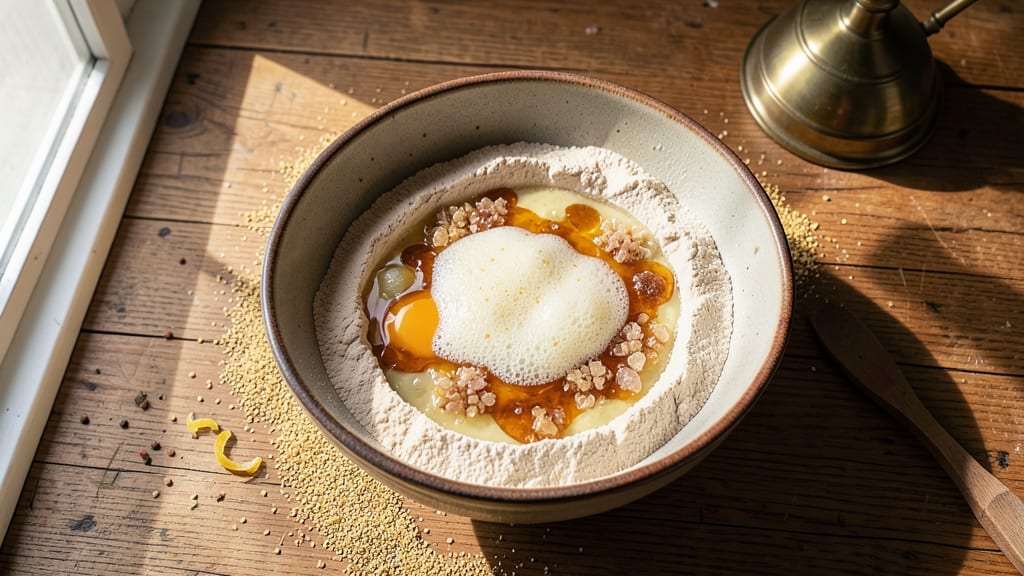
This alchemy bread recipe transforms simple ingredients into a loaf that defies expectations—crisp honey-spiced crust wrapping a tender, pillowy cornbread center. The magic happens through precise fermentation, where time and temperature work together to develop depth of flavor and an open, airy crumb.
I’ve perfected this hybrid loaf after years of experimenting with sourdough techniques, balancing artisanal texture with approachable ease.
The process begins with a hydrated dough that ferments overnight, allowing the natural yeasts to create complexity. Shaping it into a batard or boule and scoring the crust before baking unlocks that coveted oven spring, while the cornbread core adds a subtle sweetness that pairs beautifully with savory dishes.
No special equipment is needed—just patience and attention to detail.
By the time it emerges from the oven, you’ll have a loaf with a golden, aromatic crust and a soft, moist interior that’s impossible to resist. The honey-spiced exterior caramelizes into sweet, crunchy perfection, while the cornbread center stays tender and slightly sweet.
This bread is ideal for sandwiches, toast, or serving alongside soups and stews.
Ready to elevate your baking? The key lies in the fermentation—let the dough do the work while you prepare for a loaf that tastes like both comfort and craftsmanship. Here’s how to bring this alchemy to life in your kitchen.
Ingredients for alchemy bread
Four cups flour, one cup cornmeal, and a touch of alchemy create this honey-spiced masterpiece.
| Ingredient | Amount | Notes |
|---|---|---|
| All-Purpose Flour 🌾 | 4 cups | High-protein for better structure |
| Cornmeal 🌽 | 1 cup | Fine-ground for smooth texture |
| Active Dry Yeast 🍞 | ¼ oz | Freshly opened for best activity |
| Granulated Sugar 🍚 | ½ cup | White or light brown |
| Honey 🍯 | ¼ cup | Wildflower preferred for depth |
| Warm Water 💧 | 1 ½ cups | 110°F for yeast activation |
| Unsalted Butter 🧈 | ½ cup | Cold, cubed for dough enrichment |
| Large Eggs 🥚 | 2 whole | Room temperature for even mixing |
| Salt 🧂 | 1 ½ tsp | Diamond Crystal preferred |
| Ground Cinnamon 🌿 | 1 tsp | Freshly ground for warmth |
| Ground Ginger 🌶️ | ½ tsp | Freshly ground for zing |
| Ground Cloves 🌿 | ¼ tsp | Freshly ground for depth |
| Corn Oil 🫒 | 2 tbsp | For dough enrichment |
The yeast is your secret weapon here—King Arthur or Bob’s Red Mill brands are my go-to for consistent results. Check expiration dates like it’s your job, since old yeast won’t wake up. The honey should be raw and unfiltered for that floral complexity, but regular grocery store honey works in a pinch. For the cornmeal, Stone Ground Grits makes the best fine-ground version—no gritty surprises in your loaf. The butter needs to be cold and cubed when you mix it in, or you’ll end up with a sticky mess instead of a workable dough.
No honey? Maple syrup at half the amount works surprisingly well. Short on cornmeal? Substitute half the flour with fine-ground oat flour—it’ll add a subtle nuttiness. The spices are non-negotiable for that honey-spiced magic, but if you’re missing one, cinnamon alone still delivers. For the oil, vegetable or avocado oil are fine substitutes. The eggs? Flax eggs work in a bind (1 tbsp ground flax + 3 tbsp water = 1 egg), but the texture won’t be quite as tender. And for the love of all things baked, don’t skip the warm water test—sprinkle yeast on top of warm water, add a pinch of sugar, and wait 5 minutes. If it bubbles, you’re golden.
Store the dough in an airtight container in the fridge for up to 24 hours if you need to prep ahead—it’ll actually develop more flavor. The baked loaf? Room temperature for 1 hour before slicing, or it’ll be gummy. Wrap tightly in plastic and it’ll keep for 3 days at room temp, or 1 week in the fridge. Freeze slices for 3 months—just toast straight from frozen. Pro tip: Score the crust before baking with a razor blade for that artisanal look, and don’t be shy with the honey glaze afterward.
Why You'll Love This Recipe
- No-Knead Magic: I swear by this—just mix, wait, and bake. That honey and sugar combo does the work while you’re watching TV.
- Sweet Crunch Core: The cornmeal crust gives this bread a satisfying bite, while the honey inside keeps it moist and just sweet enough.
- Weeknight Hero: Toss it in the oven while you prep dinner—it’s ready by the time you’re done. My kids grab slices straight from the pan.
- Budget Baking: Uses pantry staples and stretches into sandwiches, toast, or French toast for days. Honestly, it’s my wallet’s best friend.
Step-by-step instructions for honey-spiced cornbread with crusty edges
This alchemy bread combines tender cornbread with a spiced honey crust—here's how to nail the perfect balance.
Activate the Yeast and Mix the Wet Ingredients
In a small bowl, dissolve the 0.25 oz active dry yeast in 1.5 cups warm water (about 110°F) with 0.5 cup granulated sugar. Let it sit for 5-10 minutes until frothy—this confirms the yeast is alive and ready to work. Meanwhile, in a separate bowl, whisk together 2 whole large eggs, 0.25 cup honey, 2 tbsp corn oil, and 0.5 cup cold unsalted butter cut into small cubes until fully emulsified.
The honey adds natural sweetness while keeping the crust moist, and the corn oil ensures a tender crumb. If the yeast doesn't foam, start fresh—this is your first line of defense against dense bread. I like to check the water temperature with a thermometer to avoid killing the yeast with water that's too hot.
Combine Dry Ingredients and Form the Dough
In a large mixing bowl, whisk together 4 cups all-purpose flour, 1 cup cornmeal, 1.5 tsp salt, 1 tsp ground cinnamon, 0.5 tsp ground ginger, and 0.25 tsp ground cloves. The spices should be evenly distributed—this is where the magic flavor comes from. Gradually add the yeast mixture and wet ingredients to the dry ingredients, mixing on low speed with a stand mixer or by hand until just combined.
Don’t overmix—stop when the dough comes together in a shaggy mass. The cornmeal gives structure while keeping the texture distinct from regular bread. If the dough feels too sticky, add 1 tablespoon more flour at a time until it holds together but remains pliable. This step ensures the final bread has that signature pillowy texture.
Knead, Rest, and Shape the Dough
Turn the dough onto a lightly floured surface and knead gently for 3-4 minutes until smooth. It won’t be as elastic as bread dough—this is normal. Shape it into a 9-inch round loaf (or a free-form shape if you prefer rustic edges) and place it in a lightly greased bowl. Cover with a damp towel and let it rise in a warm place for 1-1.5 hours, or until doubled in size.
The warm environment helps the dough rise evenly. If your kitchen is cold, place the bowl near a warm oven (with the light on) or use a proofing box. Poke the dough gently—if it springs back slowly, it’s ready. Overproofing leads to a collapsed loaf, so keep an eye on it.
Bake with a Honey-Spiced Crust
Preheat your oven to 375°F. Brush the risen dough generously with 2 tbsp honey mixed with 1 tsp water to create a sticky glaze. Sprinkle the top with an extra pinch of ground cinnamon and ground ginger for added warmth. Bake for 30-35 minutes until the crust is deep golden brown and the internal temperature reaches 200°F.
The honey glaze caramelizes beautifully, creating that signature crust while keeping the interior moist. If the top browns too quickly, tent the loaf with foil after 20 minutes to prevent burning. The bread is done when it sounds hollow when tapped on the bottom and pulls away from the pan cleanly.
Rest and Serve for Maximum Flavor
Remove the bread from the oven and let it cool on a wire rack for 10-15 minutes before slicing. This resting period allows the crumb to set and the flavors to meld. The interior should be soft and slightly crumbly, while the crust remains crisp and fragrant with notes of honey and spice.
Slice into wedges and serve warm—this bread is best enjoyed fresh. The contrast between the tender cornbread core and the crisp, honey-spiced crust makes every bite a revelation. Store leftovers wrapped in foil at room temperature for up to 2 days, or freeze for longer storage.
Pro Tips For Making Alchemy Bread
- Bloom Yeast in Warm Honey: Mix the yeast with the honey first—it dissolves faster and activates more reliably than in plain water. I learned this the hard way after watching my first batch take forever to rise.
- Toast the Cornmeal: Lightly toast the cornmeal in a dry pan for 2-3 minutes before mixing it in. This deepens its nutty flavor and prevents a raw, gritty texture in the final crust.
- Don’t Over-Knead the Dough: This isn’t a baguette—stop kneading once the dough pulls cleanly away from the bowl. Overworking it makes the bread dense, and you’ll regret the extra arm work.
- Use a Thermometer for Proofing: The dough is ready when it hits 75°F (24°C), not just when it looks puffy. My first attempts failed because I eyeballed it, and the bread collapsed in the oven.
Regional styles of this dish
Southern Comfort
This honey-spiced cornbread loaf draws heavy inspiration from Southern traditions, where cornbread and spiced honey pairings are staples. In the Deep South, cornbread often gets a sweet twist with molasses or brown sugar, but I’ve elevated it with wildflower honey and warm spices like cinnamon and ginger.
The texture mirrors classic Southern cornbread’s tenderness while adding the artisanal touch of a rustic crust. 🌶️
Italian Rustic Twist
For an Italian-inspired version, replace half the all-purpose flour with 00 flour (about 2 cups) to create a lighter, airier crumb. Swap the cornmeal for semolina flour (½ cup) and add 1 tbsp orange zest to the honey glaze before baking.
This variation keeps the honey-spiced crust but transforms the interior into a delicate, almost brioche-like texture—perfect for serving with olive oil and balsamic vinegar. 🍯
German Pretzel Fusion
Inspired by German pretzel dough techniques, this variation uses 1 tsp baking soda instead of yeast and incorporates 1 tbsp active dry yeast for a hybrid rise. After shaping, brush the dough with a honey-salt glaze (mix 2 tbsp honey with 1 tsp coarse sea salt) before baking.
The result? A crisp, salty crust with the pillowy cornbread core—ideal for breakfast or as a side with hearty stews. 🥨
French Baguette Hybrid
For a French-inspired take, shape the dough into a long batard loaf (about 12 inches) and bake it in a cast-iron skillet for a crispy exterior. Replace 1 cup of the all-purpose flour with bread flour (for structure) and add 1 tsp malt powder to deepen the crust’s color.
Brush the baked loaf with melted butter and sprinkle with flaky sea salt—this version is perfect for dipping in soups or serving with charcuterie. 🥖
Mexican Sweet Corn
Infuse the dough with 1 cup masa harina (instead of cornmeal) and 1 tsp chili powder for a Mexican-inspired twist. Add ½ cup grated pecorino cheese to the wet ingredients for a nutty depth.
Before baking, top the loaf with pumpkin seeds and dried chiles for a smoky-sweet contrast. Serve warm with habanero honey for a spicy-sweet kick. 🌵
Scandinavian Cardamom
Swap the cinnamon and ginger for 1 tsp ground cardamom and ½ tsp allspice to create a Nordic-inspired loaf. Use rye flour (½ cup) instead of all-purpose for a denser, heartier texture.
Brush the baked crust with butter and sprinkle with poppy seeds for a subtle crunch. This version pairs beautifully with smoked salmon or herbed butter. ❄️
Nutrition facts
Frequently asked questions
Why does this bread have both a cornbread core and honey-spiced crust?
The combination creates a perfect balance of textures—tender, slightly crumbly cornbread meets a crisp, aromatic crust. The honey-spiced crust adds depth of flavor while caramelizing beautifully, while the cornbread core keeps the interior moist and comforting. This alchemy of textures makes each bite exciting!
Can I make this bread without yeast?
Yes! For a quick version, replace the yeast with 1 tsp baking soda and 1 tbsp baking powder. The texture will be denser but still delicious. The honey-spiced crust will still develop, though the rise won't be as dramatic. Bake at 375°F for 25-30 minutes instead.
How do I know when the dough is properly fermented?
Look for visual and tactile cues: the dough should double in size and have a slightly jiggly surface when gently tapped. Poke it with your finger—if it springs back slowly (not immediately), it's ready. Overproofing happens when it collapses or smells overly sour. Keep an eye on it during the 1-1.5 hour rise!
What's the best way to store leftovers?
Wrap cooled slices tightly in plastic wrap or foil to preserve freshness. Store at room temperature for 2 days, or refrigerate for 1 week. For longer storage, freeze slices for up to 3 months. Toast straight from frozen for maximum crispiness!
Can I substitute the honey in the crust?
Try maple syrup (½ cup) for a similar sweetness or molasses (¼ cup) for a deeper, caramel-like flavor. For a savory twist, brush with garlic-infused oil instead. Just adjust the glaze consistency—it should coat the dough evenly without dripping.