
Main Courses
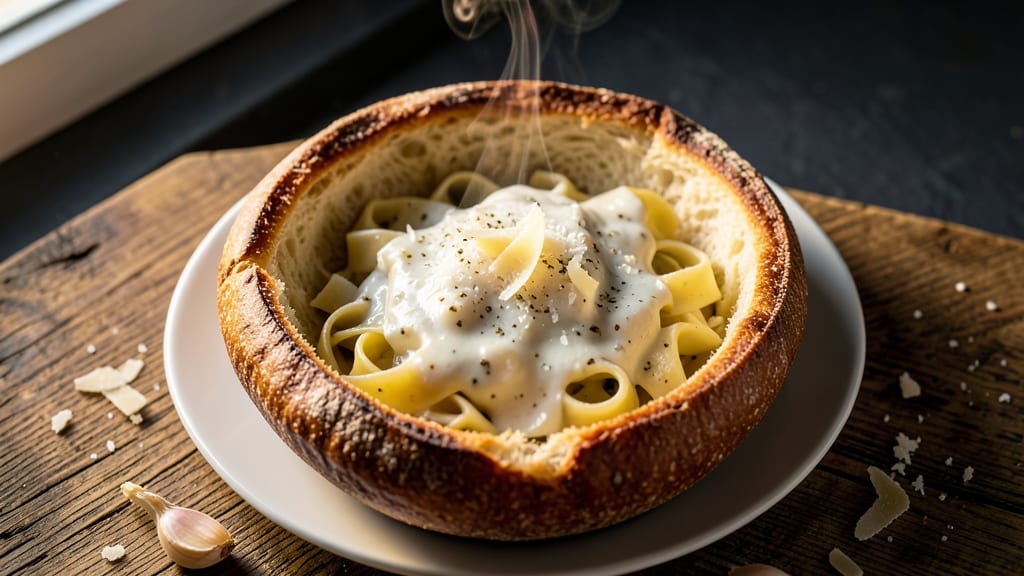
This Alfredo bread bowl recipe transforms a simple loaf into a cheesy, pasta-stuffed masterpiece that holds every bite without falling apart. The secret lies in baking the bread just until it's crispy enough to support the filling—no soggy crust here.
I perfected this technique after years of experimenting with bread bowls, and the result is a dish that looks as impressive as it tastes.
The process starts with hollowing out a round loaf, leaving just enough thickness to create a sturdy bowl. While the bread bakes, you’ll cook al dente pasta and prepare a creamy Alfredo sauce that clings perfectly to every strand.
The filling is the star: tender pasta, rich sauce, and melted cheese all nestled inside a golden, toasted crust that holds its shape.
What makes this recipe stand out is the balance—crispy yet tender bread, creamy but not heavy sauce, and a filling that stays cohesive even when you take your first bite.
The presentation is just as important as the flavor, with a sprinkle of Parmesan and fresh herbs adding that final touch of elegance. It’s the kind of dish that turns a weeknight dinner into a showstopper.
Perfect for feeding a crowd or treating yourself to a hearty meal, this bread bowl is versatile enough to adapt with your favorite proteins or veggies. Let’s get started—your taste buds (and your dinner guests) will thank you.
Ingredients for alfredo bread bowl
Crispy crust, creamy filling, and cheesy perfection—just these ingredients transform bread into a showstopper.
| Ingredient | Amount | Notes |
|---|---|---|
| Round Italian Loaf 🍞 | 1 whole | Sliced horizontally for hollowing |
| Fettuccine Pasta 🍝 | 12 oz | Cooked al dente, reserved |
| Heavy Cream 🥛 | 1 cup | Full-fat for richness |
| Unsalted Butter 🧈 | ½ cup | Cold, cubed for sauce |
| Parmesan Cheese 🧀 | 1 ½ cups | Freshly grated, block preferred |
| Garlic Cloves 🧄 | 4 cloves | Minced for sauce |
| Fresh Parsley 🌿 | ¼ cup | Chopped for garnish |
| Ground Black Pepper 🌶️ | ½ tsp | Freshly cracked |
| Salt 🧂 | 1 tsp | Kosher or sea salt |
| Olive Oil 🫒 | 2 tbsp | For bread crust |
| Shredded Mozzarella Cheese 🧀 | 1 ½ cups | Low-moisture preferred |
| Heavy Whipping Cream 🥛 | ¼ cup | For topping |
| Red Pepper Flakes 🌶️ | ¼ tsp | Optional for heat |
The bread is everything here. Italian loaves from Whole Foods or Trader Joe's work best—they're sturdy enough to hold the filling without crumbling. Look for a loaf with a thick, even crust—it'll toast up perfectly. If you can't find Italian bread, a sourdough or baguette in a pinch, but slice it thicker to compensate. The Parmesan? Grate it yourself from a wedge—pre-grated gets clumpy and won't melt right. For the pasta, fettuccine's wide surface area holds the sauce better than spaghetti, but penne or rigatoni work if that's what you've got.
No heavy cream? Full-fat coconut milk works in a bind, though it's lighter. Butter substitutes? Vegan butter or olive oil (same amount), but the sauce won't be quite as rich. Fresh parsley wilting? Dried parsley at one-third the amount saves the day. The mozzarella can be fresh, but low-moisture shredded from a block (not the pre-shredded kind) melts cleaner. For extra flavor, add a pinch of nutmeg to the sauce—trust me on this. And if you're feeling fancy, swap the olive oil for garlic-infused oil for an extra punch.
This bread bowl reheats beautifully—just 10 minutes at 350°F to crisp the crust. Store leftovers covered in the fridge for 3 days, but honestly, it's best fresh. For make-ahead prep, assemble the bowl (without baking) and refrigerate overnight. Bake straight from cold—no thawing needed. The sauce thickens as it sits, so if it's too stiff after reheating, add a splash of warm milk to loosen it up. Garnish with extra Parmesan and red pepper flakes right before serving—presentation matters!
Why You'll Love This Recipe
- No Pasta Strainer Needed: I swear by this trick—just toss the cooked fettuccine right into the bread bowl with the sauce. The bread soaks up every last bit of that buttery, cheesy alfredo, so no drippy mess or wasted leftovers. Honestly, it’s the kind of hack that makes me question why I ever strained pasta.
- Creamy Without the Guilt: That heavy cream and butter combo? Rich, yes—but the bread bowl’s crusty edges balance it perfectly. Plus, Parmesan shavings on top turn it into something restaurant-worthy without the price tag. Between us, this is the only alfredo I’ll make after my third bowl.
- Game for Any Night: Weeknight dinner? Sunday lunch? Game day spread? This holds up everywhere. I’ve served it steaming hot from the oven, cold the next day with extra cheese, and even as a "breakfast bowl" with a fried egg on top. (Yes, even on a Tuesday night.)
- Leftovers That Taste Better: Most pasta dishes dry out or get soggy—this one gets better. The bread stays sturdy, the sauce thickens into a velvety blanket, and reheating it just melts the cheese into gooey perfection. I’ve eaten this for lunch three days in a row, and my wallet (and taste buds) thank me.
Step-by-step instructions for cheesy pasta-stuffed bread bowls
Let's build these impressive bread bowls that hold every bite of creamy alfredo perfectly.
Prepare the Bread Bowl
Preheat your oven to 375°F. Take the whole round Italian loaf and slice it horizontally into two equal halves, creating a top and bottom. Remove the center of the bottom half using a serrated knife, creating a well about 3-4 inches deep. This will be your pasta bowl.
Brush the outer edges of the bread with 2 tablespoons olive oil and sprinkle generously with 1 teaspoon salt and ½ teaspoon ground black pepper. Place the bread bowl on a baking sheet and bake for 10 minutes until it's lightly toasted and firm. This step is crucial—it prevents a soggy bottom when we add our hot pasta later.
Cook the Fettuccine Al Dente
While the bread bakes, bring a large pot of salted water to a rolling boil. Add the 12 ounces fettuccine pasta and cook until it's 1 minute shy of package directions for al dente. Reserve ½ cup pasta water before draining—this starchy liquid is essential for our sauce.
Drain the pasta and immediately toss it with 1 cup heavy cream and ½ cup unsalted butter, breaking up any clumps. The residual heat from the pasta will begin melting the butter and warming the cream. Keep the pasta warm while you prepare the sauce.
Make the Creamy Alfredo Sauce
In a large skillet, melt ½ cup unsalted butter over medium heat. Add the 4 minced garlic cloves and sauté for 30 seconds until fragrant—don't let it brown or it'll turn bitter. Stir in 1½ cups freshly grated parmesan cheese and 1½ cups shredded mozzarella cheese, whisking constantly until fully melted and smooth.
Add the cooked fettuccine to the skillet along with ½ cup reserved pasta water and toss everything together. The pasta water helps create a silky sauce. If the mixture looks too thick, add more pasta water 1 tablespoon at a time until it reaches a creamy consistency that coats the back of a spoon. Stir in the ½ teaspoon ground black pepper and ¼ teaspoon red pepper flakes if using.
Assemble the Bread Bowls
Carefully spoon the fettuccine mixture into the prepared bread bowl, pressing down gently to fill it completely. The bread should be sturdy enough to hold all the filling without collapsing. If you notice any weak spots, reinforce them with additional bread pieces.
Return the filled bread bowl to the oven and bake for 5-7 minutes until the cheese is bubbly and the bread is heated through. Watch closely—the cheese should be golden and slightly crispy on top. Remove from the oven and let it rest for 2-3 minutes before serving.
Finish and Serve
Top each bread bowl with a dollop of ¼ cup heavy whipping cream and sprinkle with ¼ cup chopped fresh parsley. The cream adds an extra layer of richness, while the parsley provides a fresh contrast to the creamy filling. Serve immediately while everything is hot and gooey.
For the best experience, dig in right away—the bread will be warm and crispy, holding all that creamy alfredo perfectly. Each bite delivers the perfect combination of toasty bread, creamy pasta, and melty cheese in one satisfying package. Enjoy!
Pro Tips For Making Alfredo Bread Bowl
- Hollow the Loaf: DESCRIPTION: Use a serrated knife to slice off the top of your round Italian loaf, then scoop out the insides with a spoon—leave about ½-inch thick walls so it doesn’t collapse when you bake it. I learned this the hard way after watching my first bowl turn into a sad, crumbly mess.
- Cook Pasta Al Dente: DESCRIPTION: Pull your fettuccine out of boiling water when it’s just firm to the bite—it’ll finish cooking in the creamy sauce. Overcooked pasta gets mushy in Alfredo, and no one wants that. Taste-test a piece; if it’s still chewy, leave it in 10 more seconds.
- Melt Butter Slowly: DESCRIPTION: Warm your heavy cream and butter together over medium-low heat—never high—until the butter melts completely but doesn’t brown. I used to rush this, and the sauce would split or taste buttery instead of creamy. Patience here makes all the difference.
- Grate Your Own Parmesan: DESCRIPTION: Skip the pre-grated cheese—it’s packed with anti-caking agents that make your sauce grainy. Use a microplane or fine grater and grate it fresh right before mixing it into the sauce. Trust me, your bowl will taste richer.
Troubleshooting this recipe
Soggy Bread Fix
If your bread bowl turns soggy, the issue is usually under-toasting before adding the filling. Always bake the hollowed bread for 10-12 minutes at 375°F until it's firm to the touch.
For extra insurance, place a small baking sheet under the bread bowl during baking to catch any drips—this creates a crispy barrier between the bread and filling. 🌡️
Cheese Clumping
Pre-grated Parmesan causes clumping because it contains anti-caking agents. Always grate your own cheese from a wedge using a microplane grater for the smoothest texture. For mozzarella, buy low-moisture blocks and shred them yourself—pre-shredded contains starch to prevent sticking, which makes the sauce grainy.
If clumps form during cooking, whisk vigorously with 1 tablespoon reserved pasta water to dissolve them.
Sauce Too Thin
A runny sauce usually means too much liquid from the pasta water. Start with just ½ cup pasta water and add it gradually 1 tablespoon at a time while stirring.
If the sauce still seems too thin after assembly, remove the bread bowl from the oven, let it cool slightly, then sprinkle 1 tablespoon cornstarch mixed with 1 tablespoon water over the top. Return to the oven for 2-3 minutes—the cornstarch will thicken the sauce without altering flavor.
Bread Bowl Collapse
Weak bread structure causes collapse during baking. Choose a loaf with a thick, even crust—Italian loaves from Whole Foods or Trader Joe's work best. If your bread isn't sturdy enough, reinforce the sides by pressing extra bread pieces into the well before adding filling.
For added support, chill the assembled bowl in the refrigerator for 15 minutes before baking to firm up the structure.
Pasta Overcooked
Al dente pasta is crucial—cook it just 1 minute shy of package directions. Overcooked pasta absorbs too much sauce and becomes mushy. If your pasta is already overcooked, drain it well and toss with 1 tablespoon olive oil to prevent sticking.
For extra texture, add ¼ cup toasted breadcrumbs to the filling to soak up excess moisture.
Uneven Baking
Hot spots in the oven can cause uneven browning. Rotate the bread bowl halfway through baking (after 5 minutes) for even heat distribution. If your oven runs hot, reduce the temperature to 350°F and increase baking time by 2-3 minutes.
A light-colored baking sheet helps reflect heat more evenly—avoid dark pans that absorb heat.
Nutrition facts
Frequently asked questions
Can I use any bread for this recipe?
A round Italian loaf works best because it's sturdy enough to hold the filling without crumbling. For alternatives, try a sourdough or baguette—just slice them thicker (about 1.5 inches) to maintain structure. Avoid soft breads like brioche, as they won't hold up to the hot pasta filling.
How do I prevent the bread bowl from getting soggy?
Toast the hollowed bread for 10-12 minutes at 375°F before adding filling—this creates a crispy base. For extra insurance, place a baking sheet under the bowl during the final bake to catch drips. If your bread still feels soft, chill the assembled bowl for 15 minutes before baking to firm it up.
Can I make this bread bowl ahead of time?
Yes! Assemble the bowl (without baking) and refrigerate overnight. Bake straight from cold—no thawing needed. The sauce may thicken slightly, so add a splash of warm milk if it's too stiff. For best texture, serve within 3 days of assembly, but reheat at 350°F for 10 minutes to restore crispiness.
What proteins or veggies can I add to this recipe?
This recipe is totally customizable! Add grilled chicken, shrimp, or Italian sausage> to the pasta mixture, or stir in sautéed mushrooms, spinach, or roasted bell peppers> for veggie lovers. For extra richness, fold in crispy bacon bits> or crumbled pancetta>—just adjust the baking time by 2-3 minutes> if using wet ingredients.
Why did my sauce turn out grainy?
Pre-grated cheese contains anti-caking agents that cause clumping. Always grate your own Parmesan and mozzarella> from blocks using a microplane grater>. If clumps form during cooking, whisk in 1 tablespoon reserved pasta water> to dissolve them. For a smoother texture, strain the sauce through a fine-mesh sieve before assembling.