
Side Dishes
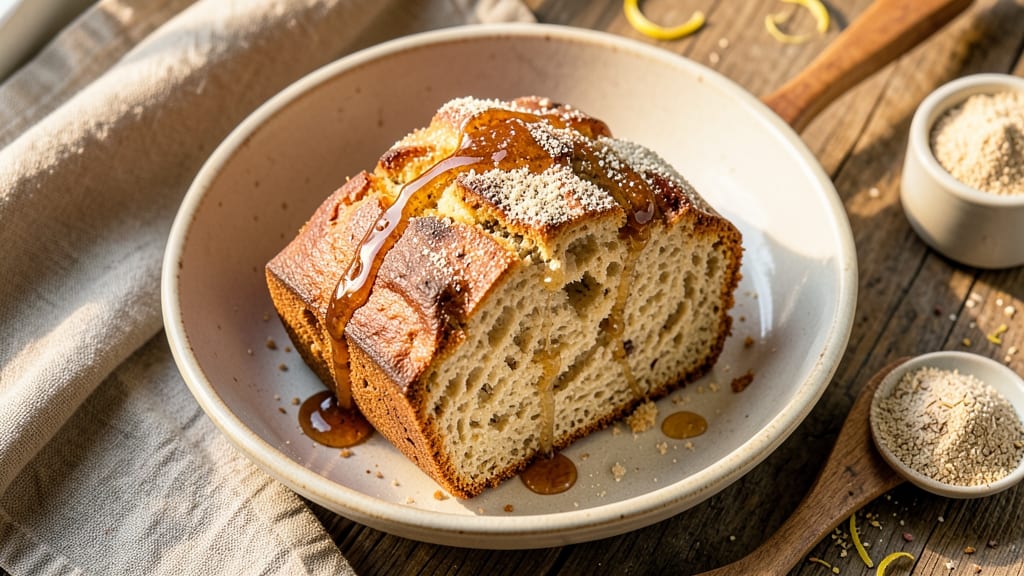
This almond flour bread recipe with psyllium husk delivers the perfect gluten-free rise and crumb—no compromises, just exceptional texture. The secret lies in psyllium husk, which acts as a natural binder and creates that signature airy structure without gluten.
I developed this recipe after years of testing, and it consistently yields bread that's light, tender, and packed with nutty flavor—ideal for sandwiches, toast, or serving alongside soups.
The beauty of this recipe is its simplicity: just blend almond flour, psyllium husk, baking powder, and a few other pantry staples, then mix with water and an acidic component (like apple cider vinegar) to activate the psyllium.
The dough comes together in minutes, and with a 350°F bake time of about 35-40 minutes, you’ll have golden, fragrant loaves ready for slicing. No special equipment is needed—just a standard loaf pan and a little patience for the psyllium to work its magic.
What sets this bread apart is its versatility. The neutral base absorbs flavors beautifully, so you can customize it with seeds, herbs, or even a touch of sweetener for a breakfast loaf.
The crumb stays moist for days, making it perfect for meal prep, while the crust develops a subtle crispness that adds texture contrast. This isn’t just gluten-free—it’s a bread that rivals traditional loaves in both performance and satisfaction.
Whether you’re baking for dietary needs or simply craving a nutritious, flavorful loaf, this recipe delivers. The psyllium husk ensures a light rise and tender crumb, while the almond flour adds richness and depth.
Ready to bake? Here’s everything you need to create bread that’s as impressive as it is delicious.
Ingredients for almond flour bread recipe with psyllium husk
Psyllium husk and almond flour work magic for gluten-free bread that rises and stays moist.
| Ingredient | Amount | Notes |
|---|---|---|
| Almond Flour 🌰 | 3 cups | Finely ground, unsweetened |
| Psyllium Husk Powder 🌾 | 2 tbsp | Pure, unsweetened powder |
| Baking Powder 🍞 | 1 ½ tsp | Metal container preferred |
| Salt 🧂 | 1 tsp | Fine sea salt preferred |
| Apple Cider Vinegar 🍎 | 1 tbsp | Raw, unfiltered preferred |
| Maple Syrup 🍁 | 2 tbsp | Grade B for depth of flavor |
| Water 💧 | 1 ¼ cups | Room temperature preferred |
| Olive Oil 🫒 | 2 tbsp | Extra-virgin for richness |
| Flaxseeds 🌿 | 1 tbsp | Ground into meal |
| Sesame Seeds 🌻 | 1 tbsp | Optional for topping |
| Poppy Seeds 🌼 | 1 tbsp | Optional for topping |
Psyllium husk is the game-changer here—Bob's Red Mill or Now Foods brands are my go-tos, but any pure powder works. The almond flour? Trader Joe's has a great fine-ground version, but if yours is coarse, pulse it in a food processor. The key is consistency—both ingredients need to be finely ground for that perfect crumb. For the seeds, Bob's Red Mill sells pre-ground flaxseeds, but grinding your own ensures freshness. Look for almond flour with a vibrant color—dull or grayish means it's gone rancid.
No psyllium husk? Chia seeds soaked in water can substitute at double the amount, but the texture won't be identical. Substituting almond flour? Oat flour or coconut flour works, but you'll need to adjust liquids—oat flour absorbs more moisture. The vinegar is non-negotiable for activating the psyllium, but lemon juice works too. For the seeds, swap sesame for sunflower or pumpkin—whatever you've got on hand. If you're avoiding seeds entirely, skip them or sprinkle extra almond flour on top for crunch.
This dough is sensitive—mix everything together, let it rest for 10 minutes, then shape. The psyllium needs time to hydrate fully. Bake immediately for best results, but you can prep the dough 1 day ahead and refrigerate it. Store wrapped at room temperature for 2 days or freeze for 3 months. Toasting slices revives the crust beautifully. For meal prep, slice and freeze—just reheat in a toaster or oven to warm through.
Why You'll Love This Recipe
- No Mixer Needed: I swear by this—just stir, pour, bake. The psyllium husk does all the heavy lifting, binding everything together without a single pulse of my blender. Honestly, it’s the kind of recipe that makes me feel like a lazy genius.
- Nutty Warmth: That first bite? Rich, toasty almond flavor with just a hint of tang from the apple cider vinegar. It’s not sweet—it’s got this sophisticated, almost buttery depth that pairs perfectly with jam or just butter straight from the fridge.
- Meal Prep MVP: Slices beautifully, stays fresh for days, and toasts like a dream. I pack it for lunches, freeze slices for quick toast, or even use it to make French toast—between us, it’s my go-to for avoiding sad, stale bread.
- Budget-Friendly Luxury: Almond flour’s pricey, but a little goes a long way here. The psyllium husk stretches the dough, and one batch feeds my whole family for breakfast and snacks. Plus, no wasted crust—every bite is perfect. (Yes, even on a Tuesday night.)
Step-by-step instructions for gluten-free almond flour bread
Here's how to mix, bake, and achieve that perfect gluten-free rise with psyllium husk.
Whisk Dry Ingredients for Perfect Texture
In a large mixing bowl, combine the 3 cups almond flour, 2 tbsp psyllium husk powder, 1.5 tsp baking powder, and 1 tsp salt. Use a whisk to break up any lumps in the psyllium husk powder—this is crucial for that light, airy crumb. The psyllium husk will absorb moisture later and create that signature gluten-free rise, so make sure it's fully incorporated.
I like to sift the almond flour first through a fine-mesh sieve to prevent clumps, especially if it's not perfectly fine. This step ensures your bread will have that tender, even texture rather than dense pockets. Once everything is evenly distributed, set the dry mixture aside for the next step.
Create the Wet Mixture for Binding
In a separate bowl, mix the 1.25 cups room temperature water, 2 tbsp olive oil, 1 tbsp apple cider vinegar, and 2 tbsp maple syrup. The vinegar will react with the baking powder later to create lift, while the olive oil adds moisture and richness to balance the almond flour's dryness. Stir well until everything is fully combined—you should see a smooth, slightly thick liquid.
Here's a pro tip: If you're using ground flaxseeds, grind them fresh in a coffee grinder or mortar and pestle right before mixing. Add the 1 tbsp ground flaxseeds to this wet mixture now. The flaxseeds will act as a natural binder, helping hold the bread together without gluten. Let this mixture sit for 2-3 minutes while you prepare your baking pan.
Combine Wet and Dry Ingredients
Pour the wet mixture into the bowl with the dry ingredients and gently fold everything together using a rubber spatula. Start by cutting through the center and folding the edges inward, then rotate the bowl and repeat. This method prevents overmixing, which can make the bread dense. You're looking for a thick batter that holds its shape when you lift the spatula—it should be cohesive but still slightly sticky.
For best results, don't overmix. The psyllium husk will activate as it absorbs moisture, so you want to preserve as much air as possible in the batter. If the mixture seems too thick after folding, add 1-2 teaspoons of water at a time until it reaches a thick pancake batter consistency. This texture is perfect for creating that light, airy crumb.
Prepare the Loaf Pan and Bake
Preheat your oven to 350°F and lightly grease an 8x4-inch loaf pan with olive oil or line it with parchment paper for easy removal. Pour the batter into the prepared pan and smooth the top with a spatula. For that beautiful crust, sprinkle the top with 1 tbsp sesame seeds and 1 tbsp poppy seeds (if using). These seeds add texture and visual appeal while baking.
Bake for 45-50 minutes until the top is golden brown and a toothpick inserted in the center comes out clean. The bread is done when it springs back slightly when pressed gently in the center—this indicates proper doneness. The psyllium husk will create a slightly chewy texture, but the overall crumb should be tender and moist.
Cool and Slice for Perfect Serving
Remove the bread from the oven and let it cool in the pan for 10 minutes, then transfer it to a wire rack to cool completely. This cooling period is essential—it allows the psyllium husk to fully set and the crumb to firm up slightly. If you slice it too soon, the bread might fall apart or be gummy.
Once fully cooled, slice the bread into 8 even servings using a serrated knife. For the cleanest cuts, dip the knife in hot water between slices. Serve warm or at room temperature with your favorite butter or jam. This gluten-free bread holds up well for 3-4 days when stored in an airtight container, or you can freeze slices for up to 3 months. The psyllium husk actually helps preserve freshness longer than traditional bread!
Pro Tips For Making Almond Flour Bread Recipe With Psyllium Husk
- Mix the Psyllium Last: I learned this the hard way—adding psyllium husk powder to wet ingredients too early turns your batter into a gummy mess. Stir it in just before folding in the dry almond flour, then mix gently until combined. Overworking it = dense, rubbery bread.
- Use Room-Temp Almond Flour: Cold almond flour absorbs liquid like a sponge, leaving you scrambling for extra eggs or milk. Let your flour sit out for 30 minutes before measuring—it makes the batter smoother and the crumb lighter. (Yes, even if you’re impatient like me.)
- Don’t Overbake the Crust: Psyllium bread dries out fast, and once that crust sets, it won’t soften back. Pull it out when the internal temp hits 190°F (a toothpick should come out clean but slightly moist). Tent with foil early if your oven runs hot.
- Whisk the Vinegar First: Apple cider vinegar reacts with baking powder immediately, so don’t toss it in with the dry ingredients. Mix it with your wet components (if using) or the water first, then let sit for 2 minutes before combining—this guarantees proper rise. Skimp here, and your bread flops.
Storing and reheating your almond flour bread recipe with psyllium husk
Room Temperature Storage
Store your almond flour bread in an airtight container at room temperature for up to 3 days. The psyllium husk helps maintain moisture, but the almond flour can dry out faster than wheat-based bread.
I like to wrap slices in parchment paper before storing to preserve freshness. For extra crispiness, toast slices before storing—this revives the crust beautifully when reheated. 🌰
Refrigerator Preservation
If you need to keep bread longer than 3 days, refrigerate it in an airtight container for up to 5 days. The cold slows down the psyllium husk's moisture-binding properties, so the texture may become slightly denser.
To revive, wrap slices in a damp paper towel and warm in a toaster or oven at 300°F for 5 minutes. This method works perfectly for meal prep—just reheat before serving. ❄️
Freezer-Friendly Slices
For maximum freshness, slice the bread and freeze individual portions in quart-sized freezer bags with all air removed. Label with dates—this bread stays fresh for up to 3 months.
When ready to eat, thaw overnight in the fridge or warm directly from frozen in a toaster or oven at 350°F for 8-10 minutes. The psyllium husk prevents freezer burn, keeping the crumb tender and the crust intact. 💫
Reviving Stale Bread
If your bread loses its crispness, don't toss it! Place slices on a baking sheet and warm in a 350°F oven for 5-7 minutes until toasted. For extra moisture, brush with a little olive oil before reheating.
This trick works especially well for toast or French toast—just add a splash of milk and egg to the mix. The psyllium husk's binding properties help maintain structure even after reheating. 🔥
Microwave Quick Fix
For fast reheating, wrap a slice in a damp paper towel and microwave on medium power (50%) for 20-30 seconds. This prevents drying while warming through. Avoid high power settings—they can make almond flour bread rubbery.
For best results, pair with butter or jam immediately after reheating to restore moisture. This method is perfect for busy mornings when you need toast in a hurry. ⏱️
Seed Topping Tips
If you added sesame or poppy seeds, they'll crisp up beautifully when toasted. For extra flavor, sprinkle everything bagel seasoning on top before reheating. The seeds add texture contrast that makes every bite more satisfying.
Store seeds separately if you prefer a cleaner look—just sprinkle fresh ones before serving. This small detail elevates the presentation without extra effort. 🌻
Nutrition facts
Frequently asked questions
Why does this recipe need psyllium husk?
Psyllium husk is the secret to gluten-free rise and structure! It acts as a natural binder and thickener, replacing gluten's elastic properties. When hydrated, it forms a gel-like substance that creates that signature light, airy crumb. Without it, your bread would be dense and crumbly. Think of it as the gluten-free "glue" that holds everything together beautifully.
Can I make this bread without almond flour?
Yes, but you'll need to adjust the recipe. Swap almond flour for oat flour or coconut flour, but remember: oat flour needs extra liquid (2-3 tbsp more water) while coconut flour requires 4x the liquid by weight. The texture will differ slightly—coconut flour tends to be denser, while oat flour may be more neutral. Always measure carefully!
How do I fix dense or gummy bread?
Dense bread usually means overmixing or insufficient psyllium activation. Next time, fold just until combined and let the batter rest for 10 minutes before baking. For gummy texture, your oven may be too cool or the bread underbaked. Check with a toothpick—it should come out clean. If still gummy, bake 5 more minutes at 325°F to dry out excess moisture.
What's the best way to toast this bread?
For perfect toast, slice bread 1/2-inch thick and toast in a 375°F oven for 5-7 minutes until golden and crisp. Or use a toaster at medium-high heat for 3-4 minutes, flipping once. The psyllium helps hold the shape, so it won't burn easily. Pro tip: Brush with melted butter or olive oil after toasting for extra richness.
Can I add sweetener or spices to this recipe?
For sweet versions, replace 1 tbsp maple syrup with honey or agave. Add 1 tsp cinnamon or vanilla extract for flavor. For savory twists, try 1 tsp dried rosemary or garlic powder. Just remember: psyllium absorbs moisture, so if adding wet ingredients (like honey), reduce water by 1 tbsp to maintain the right consistency.