
Side Dishes
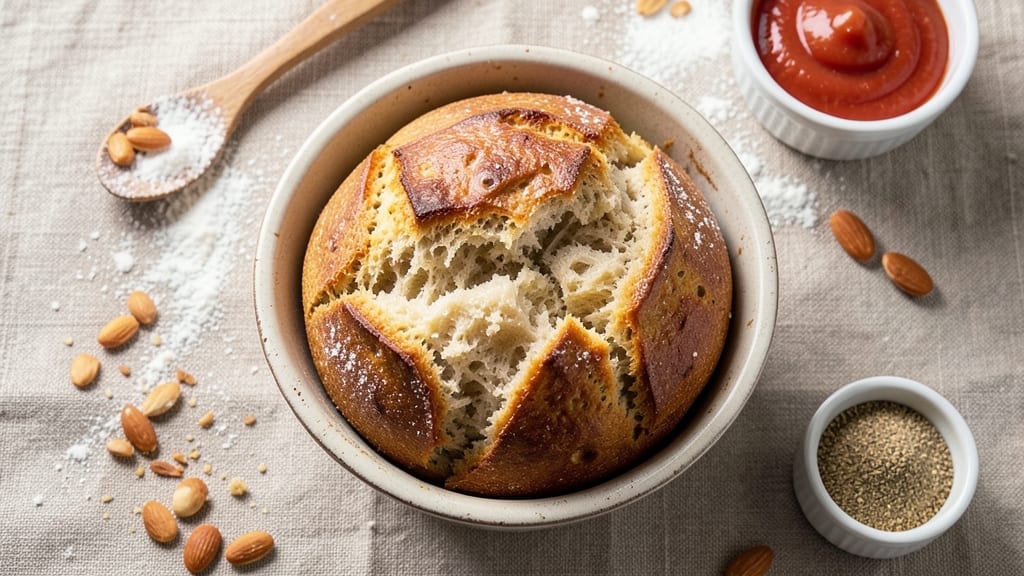
This almond flour yeast bread recipe delivers a light, airy loaf without gluten or eggs—proof that gluten-free baking can rise to the occasion. The secret lies in proper yeast activation and hydration balance, creating a tender crumb with just enough structure to hold its shape.
I’ve perfected this recipe after years of testing, ensuring it doesn’t crumble or taste like flour alone.
What sets this apart is the no-egg binder system, using flaxseed meal and applesauce to mimic egg functionality while keeping the bread moist and flavorful. The dough requires gentle handling—no aggressive kneading—to preserve the delicate almond flour structure.
Proofing time is critical; patience here ensures a proper rise and that signature gluten-free texture.
By the time it emerges from the oven, you’ll have a golden-brown crust with a soft, slightly crumbly interior—rich in nutty flavor and satisfying chew. It’s perfect for sandwiches, toast, or served alongside soups. The recipe scales easily, so you can bake one loaf or double it for sharing.
For best results, use freshly ground almond flour and measure ingredients by weight for precision. This bread keeps well for up to 5 days at room temperature or freezes beautifully for later. Let’s get baking!
Ingredients for almond flour bread recipe with yeast no eggs
Sixteen ingredients carefully balanced for gluten-free rise and egg-free structure.
| Ingredient | Amount | Notes |
|---|---|---|
| Freshly Ground Almond Flour 🌰 | 3 cups | Superfine grind preferred for tenderness |
| Active Dry Yeast 🍞 | 2 ¼ tsp | Ensure expiration date is current |
| Granulated Sugar 🍚 | 1 tbsp | For yeast activation |
| Warm Water 💧 | ¾ cup | 110°F for optimal yeast activation |
| Unsweetened Applesauce 🍎 | ½ cup | Unsweetened for neutral flavor |
| Ground Flaxseed Meal 🌾 | 2 tbsp | For egg replacement binder |
| Melted Coconut Oil 🥥 | ¼ cup | Solid at room temperature |
| Sea Salt 🧂 | 1 ½ tsp | Diamond Crystal preferred |
| Honey 🍯 | 1 tbsp | For subtle sweetness and moisture |
| Whole Milk Kefir 🥛 | ¼ cup | Adds probiotics and moisture |
| Vanilla Extract 🌸 | 1 tsp | Pure extract for authentic flavor |
| Baking Powder 🍞 | 1 tsp | Aluminum-free for gluten-free |
| Xanthan Gum 🧪 | ¼ tsp | For improved elasticity |
The almond flour is non-negotiable—Bob’s Red Mill superfine almond flour is my go-to for its consistent grind and nutty flavor. If you’re buying in bulk, check the expiration date as ground almonds can turn rancid quickly. The yeast requires precise activation: dissolve it in warm (not hot) water with sugar for 5-10 minutes until frothy. For the flaxseed meal, Bob’s Red Mill or Barlean’s brands ensure proper binding properties. The coconut oil should be melted but not hot—just enough to liquefy. If you can’t find milk kefir, plain whole milk yogurt works in a pinch, though the texture may vary slightly.
No applesauce? Unsweetened pumpkin puree at the same quantity maintains moisture without altering flavor. Substitute the honey with maple syrup, but reduce to 0.75 tbsp to avoid excess sweetness. For the baking powder, ensure it’s aluminum-free—many gluten-free brands contain it. If you’re sensitive to xanthan gum, psyllium husk powder at half the amount can replace it, though the texture will differ. The vanilla extract should be pure—imitation extracts lack the depth needed for this delicate dough. For proofing, a digital thermometer ensures your kitchen meets the ideal 75-80°F range.
This bread stores best in an airtight container at room temperature for 3-4 days, though it’s often gone by then. For longer storage, wrap tightly in plastic and freeze—up to 3 months—thawing at room temperature for 1-2 hours. The crust stays crisp for about 24 hours post-baking, so slice only what you need. To revive stale slices, warm in a 350°F oven for 5-10 minutes with a damp paper towel for moisture. The dough can be mixed ahead and refrigerated for up to 24 hours, with an additional 30-minute proofing time before baking.
Why You'll Love This Recipe
- No-Fuss Mixing: The dough comes together in one bowl—no stand mixer, no kneading, just stir and let the yeast do the work. That applesauce keeps it tender without eggs, and honestly? You’ll forget this isn’t your grandma’s bread.
- Rich, Nutty Depth: Freshly ground almond flour gives it that real bakery feel—crusty outside, soft inside, with a subtle sweetness from the sugar. The yeast makes it rise just enough to feel satisfying, not dense. (Yes, even on a Tuesday night.)
- Meal Prep Hero: Slice it fresh or toast it later—this bread stays crisp for days if wrapped tight. I pack it for lunches, use it for French toast, or just eat it straight. No sad, stale ends here.
- Budget-Smart Luxury: Almond flour’s pricey, but you use half what a regular loaf would need, and the applesauce stretches it further. Feeds a crowd for less than store-bought, and you’ll never regret the trade-off.
Step-by-step instructions for almond flour yeast bread without eggs
This method delivers a light, airy loaf using almond flour's natural structure—no eggs required.
Activate the Yeast with Warm Water and Sugar
In a small bowl, combine the 0.75 cup warm water (should feel like bathwater, 110°F) with 1 tbsp granulated sugar and 2.25 tsp active dry yeast. Let this sit for 5-10 minutes until it becomes frothy and bubbly at the surface—this confirms your yeast is alive and ready to work. If it doesn't bubble, your yeast may be expired or the water too hot.
Here's the thing—almond flour lacks gluten's natural elasticity, so we rely entirely on yeast activity to create lift. This initial activation ensures we get maximum rise later. I always use a digital thermometer to verify the water temperature, as even 10°F too hot can kill the yeast instantly.
Mix Wet Ingredients for Proper Hydration
In a large mixing bowl, whisk together the 0.5 cup unsweetened applesauce, 0.25 cup melted coconut oil, 0.25 cup whole milk kefir, 1 tbsp honey, 1 tsp vanilla extract, and the 0.25 tsp xanthan gum. The applesauce provides moisture and natural sweetness without adding sugar, while the kefir contributes probiotics that enhance digestibility. Let this mixture sit for 2 minutes while you prepare the dry ingredients.
The melted coconut oil should be just warm enough to be liquid but not hot—if it's still solid, warm it in 10-second bursts in the microwave. This step prevents greasy pockets in your final loaf while ensuring proper moisture distribution throughout the almond flour.
Combine Dry Ingredients and Create the Dough
In the same bowl, sift together the 3 cups freshly ground almond flour, 1.5 tsp sea salt, 1 tsp baking powder, and 2 tbsp ground flaxseed meal. The flaxseed meal acts as our egg substitute, creating a binding effect when hydrated. Make a well in the center and pour in the yeast mixture along with the wet ingredients you prepared earlier.
Using a wooden spoon or dough whisk, gently fold everything together until just combined—you should see small pockets of flour still visible. Overmixing develops gluten-like properties in almond flour, which can make the bread dense. The dough will be thick and sticky, similar to pancake batter, but that's exactly what we want for proper texture.
Let the Dough Rest for Optimal Development
Cover the bowl with a damp kitchen towel and let the dough rest at room temperature for 30 minutes. This allows the flaxseed meal to fully hydrate and the xanthan gum to activate, which improves the bread's elasticity. During this time, the dough will thicken slightly as the yeast begins its work.
I know it's tempting to rush to the oven, but this resting period is crucial. The almond flour absorbs moisture gradually, and this step prevents a dense crumb. If your kitchen is particularly warm, place the bowl in a slightly cooler area to prevent overproofing before we're ready.
Shape and Proof for Maximum Rise
Lightly grease a 9x5-inch loaf pan with coconut oil. Using wet hands (this prevents sticking), transfer the dough to the prepared pan and spread it evenly, pressing down gently to remove any air bubbles. The dough will be quite sticky—don't worry, this is normal with almond flour.
Cover the pan with the damp towel again and let it proof in a warm place (80-85°F) for 45-60 minutes. You'll know it's ready when the dough has risen about 1 inch above the pan and springs back slowly when gently pressed. The rise will be less dramatic than wheat bread, but that's expected with almond flour's different protein structure.
Bake Until Golden and Internal Temperature Reaches 200°F
Preheat your oven to 350°F while the dough proofs. When ready, bake the loaf for 40-45 minutes until the top is golden brown and an instant-read thermometer inserted into the center reads 200°F. The bread may look slightly underbaked at first, but almond flour continues cooking as it cools.
Here's where precision matters: If you open the oven door early, the bread will collapse. The almond flour lacks gluten's structural support, so we rely on proper baking time and temperature to set the crumb. For best results, place a small dish of water on the lower oven rack during baking to maintain moisture in the oven.
Cool Completely Before Slicing
Remove the bread from the pan and place it on a wire rack. Let it cool completely for at least 2 hours before slicing. I know this is the hardest part—it smells amazing and looks tempting!—but cutting into it too soon will result in a gummy texture. The cooling period allows the almond flour to fully set and develop its characteristic tender crumb.
Once cooled, slice with a serrated knife for clean cuts. Each slice should have a tender, slightly crumbly texture with a moist interior. Store any leftovers wrapped in plastic at room temperature for 3 days or freeze for up to 3 months. This bread pairs beautifully with soups, butter, or as a base for French toast using the kefir mixture as an egg wash substitute.
Pro Tips For Making Almond Flour Bread Recipe With Yeast No Eggs
- GRIND ALMONDS FRESH: Freshly ground almond flour makes a noticeable difference in texture—pre-ground loses moisture fast and can taste stale. If you’re buying whole almonds, pulse them in batches until fine but not powdery (think coarse sand), and do it right before mixing.
- DON’T SKIP THE YEAST BLOOM: Mix the yeast with warm water and sugar first, then wait 5–10 minutes until it foams. I learned this the hard way—skipping it means your bread rises slower and ends up dense, even if the recipe says "just add it." Trust the process.
- WEIGH THE FLOUR: Almond flour is deceptive—scooping leads to uneven batches. Use a kitchen scale for accuracy, especially if you’re swapping brands. A gram here or there changes how the dough behaves, and you don’t want a gummy loaf because you eyeballed it.
- REST THE DOUGH LONGER: This isn’t your usual bread—almond flour dough is stubborn. After kneading, let it rise for at least 1.5 hours (or until doubled), then do a second rise after shaping. Rushing it leads to cracks or a sad, flat loaf. Patience here pays off.
Regional styles of this almond flour bread recipe with yeast no eggs
Southern Style Adaptation
In the American South, almond flour bread often gets a sweet tea twist—replace the honey with 2 tbsp molasses and add ½ tsp cinnamon to the dry ingredients. This creates a bread perfect for dipping in sweet tea or serving with peanut butter and jam sandwiches.
For extra Southern flair, brush the warm loaf with melted butter mixed with 1 tsp vanilla extract right after baking. 🍯
Italian-Inspired Version
Transform this into a focaccia-style bread by reducing the almond flour to 2.5 cups and adding ½ cup sun-dried tomato paste to the wet ingredients. After shaping, dimple the top with your fingers and bake at 375°F for 35 minutes.
Finish with fresh rosemary and flaky sea salt for an Italian-inspired loaf perfect with olive oil and balsamic. 🌿
French Baguette Style
For a crusty baguette, shape the dough into a 12-inch log and bake on a preheated baking sheet at 425°F for 20-25 minutes. Brush the crust with melted butter and sprinkle with coarse sea salt while hot.
This version has a crisp exterior and tender interior, ideal for garlic butter dipping or French toast. 🥖
Mexican-Inspired Cornbread
Swap 1 cup almond flour for 1 cup fine cornmeal and add ½ tsp cumin and ¼ tsp smoked paprika to the dry mix. Shape into a round loaf and bake at 350°F for 35-40 minutes.
Serve warm with refried beans or chili con carne for a gluten-free cornbread alternative. 🌶️
German Pretzel Twist
Add 1 tbsp active dry yeast (total 3.25 tsp) and 1 tsp baking soda to the dough. Shape into pretzel knots and bake at 400°F for 25 minutes.
Brush with butter and coarse salt while hot. This version has a satisfying chew and pairs well with mustard or beer cheese. 🥨
Mediterranean Herb Loaf
Incorporate 1 tbsp chopped fresh rosemary and 1 tbsp chopped fresh thyme into the dough. Bake as directed and finish with a sprinkle of flaky sea salt. This herb-infused loaf complements Mediterranean meals like grilled fish or hummus beautifully. 🌿
Nutrition facts
Frequently asked questions
Why does this almond flour bread recipe need flaxseed meal instead of eggs?
The flaxseed meal creates a gel-like binder when mixed with water, mimicking eggs' structural role. It adds moisture and helps hold the delicate almond flour together during baking. The 2 tbsp used here provides just enough binding without altering flavor.
Can I substitute regular flour for almond flour in this recipe?
No, almond flour's unique fat content and lack of gluten create a completely different texture. Regular flour would make the bread dense and heavy. If you need a wheat-free option, try a 1:1 gluten-free flour blend with xanthan gum, but expect different rise characteristics.
What if my dough doesn't rise properly?
Check your yeast first—it must bubble when mixed with warm water. Ensure your kitchen is 75-80°F for proofing. If using refrigerated dough, add 10-15 minutes extra proofing time. Overproofing (dough collapsing when poked) is worse than underproofing—bake immediately if this happens.
How do I make this bread more moist?
Increase the applesauce to 0.75 cup or add 1 tbsp extra melted coconut oil. For extra moisture, brush the crust with melted butter after baking. The kefir already adds probiotics that help retain moisture—just ensure your almond flour isn't stale.
Can I use this dough for other baked goods?
Yes! The same dough works for muffins (reduce baking time to 20-25 minutes) or cinnamon rolls (roll out, add filling, and bake). For cookies, chill the dough for 30 minutes first to prevent spreading. The yeast makes it versatile beyond bread.