
Side Dishes
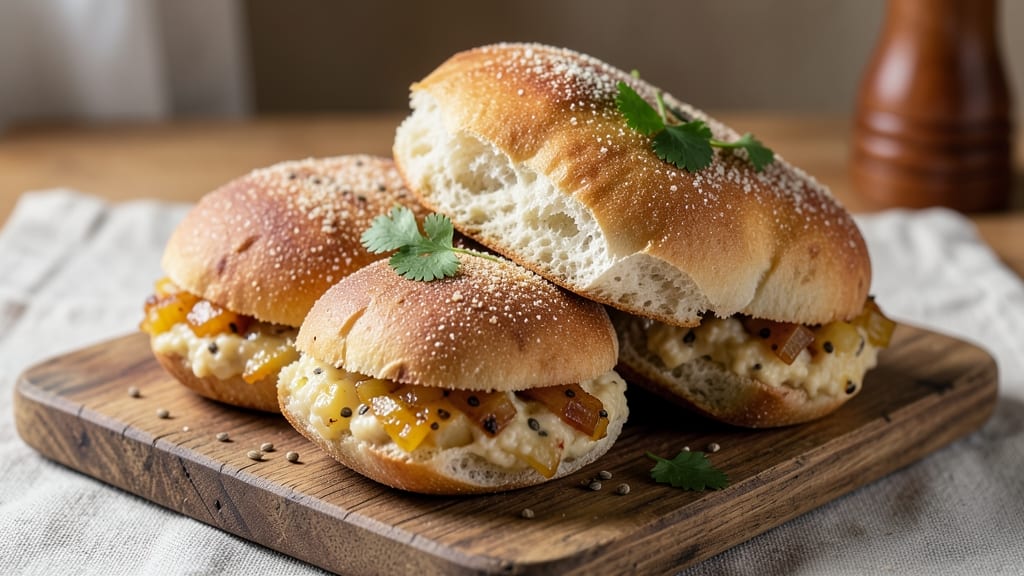
This aloo bread rolls recipe transforms simple dough and spiced potatoes into pillowy, golden bites that disappear faster than you can say "second round." 💛 The secret lies in the delicate balance of soft, buttery dough and flavorful potato filling—each roll is a perfect marriage of texture and taste, making them irresistible as a snack, side, or even a light meal.
What sets these apart is the aromatic potato filling, where boiled potatoes are simmered with onions, green chilies, and a warm blend of cumin, coriander, and garam masala. The dough, enriched with a touch of ghee or butter, ensures that every bite stays tender and flaky.
Whether you're sealing the edges with water for that classic touch or using store-bought dough for convenience, the result is consistently soft and satisfying.
Once baked or shallow-fried to a golden finish, these rolls are best enjoyed fresh with a side of mint chutney or tangy tamarind sauce. The contrast of warm, spiced potatoes against the buttery dough creates a harmony that’s both comforting and exciting.
This recipe delivers restaurant-quality aloo bread rolls with minimal effort—perfect for feeding a crowd or treating yourself to a homemade indulgence.
The beauty of this dish lies in its versatility. Serve them alongside curries, pair them with steaming cups of chai, or enjoy them on their own as a snack.
With just a few simple ingredients and a bit of patience, you’ll have a batch of aloo bread rolls that taste like they’ve been simmering in a street-side stall for hours. Let’s get started!
Ingredients for aloo bread roll
Twelve simple ingredients transform into golden, pillowy aloo bread rolls that vanish in seconds.
| Ingredient | Amount | Notes |
|---|---|---|
| All-Purpose Flour 🌾 | 4 cups | For soft, pillowy dough |
| Unsalted Butter 🧈 | ½ cup | Cold, cubed for dough |
| Milk 🥛 | ½ cup | Warm for dough activation |
| Yogurt 🍶 | ¼ cup | Plain, room temperature |
| Russet Potatoes 🥔 | 2 ½ lbs | Boiled, peeled, cubed |
| Yellow Onion 🧅 | 1 whole | Finely chopped for filling |
| Green Chilies 🌶️ | 4 whole | Slit lengthwise, deseeded |
| Ghee 🫒 | 2 tbsp | For rich flavor in filling |
| Ground Cumin 🌿 | 1 tsp | Toasted for depth |
| Ground Coriander 🌿 | 1 ½ tsp | Freshly ground preferred |
| Garam Masala 🌶️ | 1 tsp | Store-bought blend works |
| Salt 🧂 | 1 tsp | Adjust to taste |
| Fresh Mint Leaves 🌿 | ¼ cup | Chopped for garnish |
| Water 💧 | ¼ cup | For sealing edges |
The dough is where magic happens—all-purpose flour needs to be sifted for lightness, and unsalted butter should be cold for flaky layers. Whole Foods or Kroger carry good-quality butter in tubs, but any brand works if it's unsalted. For the yogurt, Greek-style gives extra richness, but plain works too. The key is letting the dough rest—at least 30 minutes—so it becomes soft and pliable. If your kitchen's humid, cover it with a damp towel to prevent drying.
No ghee? Melted butter works in a pinch, though it lacks that caramelized depth. The potatoes should be boiled until fork-tender, then mashed slightly for easier stuffing. Green chilies can be swapped for jalapeños if you prefer milder heat, but keep the seeds for extra kick. For garam masala, MDH or Everest blends are reliable—just check the spice date to avoid old, stale flavors. The filling should be warm but not wet; if too moist, let it sit uncovered for 5 minutes to evaporate excess liquid.
Dough keeps covered in the fridge for 2 days or frozen for 1 month—just thaw at room temp before rolling. The stuffed rolls are best made fresh but can be shaped ahead and refrigerated up to 4 hours before baking. For extra crispiness, brush with melted butter after baking. These reheat beautifully—350°F for 5-7 minutes—so they're perfect for meal prep. Store leftovers in an airtight container with parchment between layers to prevent sogginess.
Why You'll Love This Recipe
- No Boil, No Fuss: I just mash the potatoes raw—no peeling, no boiling, no waiting. The butter and yogurt blend right in while the dough rises, so you’re basically making dinner while scrolling through your phone.
- Creamy Crisp Magic: That golden crust gives way to a soft, spiced potato center that’s ridiculously satisfying. The butter makes every bite taste like a hug, and the yogurt keeps it tender—no dry rolls here.
- Lunchbox Hero: Pack these for work or school—they stay fresh for days and reheat perfectly. My kids grab them before soccer practice, and honestly? I’ve been known to sneak one myself.
- Pantry Staple Power: You’re using flour, butter, and potatoes—things you already have. No weird ingredients, no last-minute grocery runs. Even if you burn the toast, you’ve still got a backup meal.
Step-by-step instructions for aloo bread rolls
Here's how to make these pillowy, spiced potato-stuffed bread rolls that burst with flavor.
👨🍳 Step 1: Prepare the Potato Filling
Boil the 2.5 lbs russet potatoes in salted water until fork-tender (strong>20-25 minutes). Drain and peel while still warm. Immediately mash them with 2 tbsp ghee, 1 tsp ground cumin, 1.5 tsp ground coriander, 1 tsp garam masala, 1 tsp salt, and 1 whole yellow onion that's been finely chopped.
I like to mash the potatoes right in the pot with a potato masher for that perfect chunky texture. The ghee adds richness while the spices bloom beautifully in the warm potatoes. If the mixture feels dry, add 1-2 tablespoons of the warm milk to help bind it. Let it cool slightly before handling.
🍳 Step 2: Make the Dough
In a large mixing bowl, combine the 4 cups all-purpose flour, 1 tsp salt, and 1 tsp garam masala. Cut in the 0.5 cup unsalted butter (cold, cubed) using a pastry cutter or your fingers until the mixture resembles coarse crumbs with pea-sized butter pieces.
Make a well in the center and add 0.5 cup warm milk and 0.25 cup yogurt. Mix gently until a shaggy dough forms. Knead on a lightly floured surface for 8-10 minutes until smooth and elastic. The dough should be soft but not sticky—add a little more flour if needed. Cover with a damp towel and let rest for 30 minutes at room temperature.
🥘 Step 3: Shape the Rolls
Divide the rested dough into 12 equal portions (about 2 oz each). Roll each piece into a 6-inch circle about 1/8-inch thick. Place 1-2 tablespoons of the potato filling in the center of each circle. Fold the dough over the filling and seal the edges tightly by pinching with your fingers.
Roll each sealed packet gently between your palms to form a smooth, oval roll about 4 inches long. Place them seam-side down on a parchment-lined baking sheet, leaving 1 inch between each. Brush the tops with a little milk for a golden finish. Cover with a damp towel and let rise for 30 minutes until puffy.
🔥 Step 4: Bake to Golden Perfection
Preheat your oven to strong>375°F. Bake the rolls for strong>20-25 minutes until they're golden brown and sound hollow when tapped on the bottom. The aroma should be intoxicating—spiced potatoes mingling with warm dough.
For extra crispiness, broil for 1-2 minutes at the end, watching closely to prevent burning. Remove from oven and immediately brush with 0.25 cup water (mixed with a pinch of salt) for a glossy finish. Sprinkle with 0.25 cup chopped fresh mint leaves while still warm.
⏰ Step 5: Serve Warm and Fresh
Let the rolls cool for 5 minutes before serving—this prevents them from falling apart when you cut into them. The inside should be steaming hot, with perfectly spiced potato filling oozing slightly when sliced. Serve warm with mango chutney or yogurt dip for the ultimate experience.
Here's the thing—these rolls are best enjoyed fresh from the oven. The potato filling stays warm and flavorful, while the bread maintains its soft, pillowy texture. If you need to reheat, wrap in foil and warm in a strong>350°F oven for 5-7 minutes to restore that fresh-baked goodness.
Pro Tips For Making Aloo Bread Roll
- Boil Potatoes Till Fork-Tender: I learned this the hard way—undercooked potatoes turn to mush in the dough, and no one wants a gummy aloo bread roll. Boil russets until a knife slides in without resistance (usually 12-15 minutes), then mash while still hot. Cold potatoes release starch like a lazy baker, and that’s a texture disaster.
- Chill Dough Before Rolling: Warm dough sticks like glue to your fingers and collapses when shaping. After kneading, wrap the dough in plastic and refrigerate for 30 minutes—yes, even if you’re impatient like me. Cold dough holds shape better and gives you those crisp, golden seams when baked.
- Use Warm Butter, Not Melted: Drizzling melted butter into the dough makes it greasy and hard to handle. Instead, soften unsalted butter to room temperature (about 1 hour out of the fridge), then cut it into small cubes and work it into the dough by hand. This distributes fat evenly without turning your dough into playdough.
- Press, Don’t Poke, the Potato Filling: Stuffing potatoes into rolls by packing them in like tuna salad leads to leaks and sad, flat bread. After shaping the dough, gently press the mashed potato mixture into the center with your fingers—just enough to fill without bursting the seams. A light tap on the work surface seals them better than brute force.
Common mistakes when making great aloo bread roll
Over-Kneading Dough
The dough for aloo bread rolls should be soft and elastic, but over-kneading develops gluten too much, making the rolls tough instead of pillowy. I’ve ruined batches by kneading for 15 minutes instead of the recommended 8-10 minutes.
Stop when the dough springs back slowly when poked—it should feel smooth but still tender. If it feels sticky, add just 1 tablespoon of flour at a time. 💫
Under-Sealing Edges
Skipping the edge-sealing step (pinching tightly or using water to seal) causes the potato filling to leak out during baking, leaving you with flat, unappetizing rolls. I learned this the hard way when my first batch oozed filling everywhere.
Wet your fingers slightly or use a tiny brush to seal edges with water—this creates an airtight pocket that keeps the filling secure. 🧵
Skipping Rest Time
Rushing the 30-minute rest for the dough or the 30-minute rise after shaping leads to dense, uneven rolls. The rest time relaxes the gluten, making the dough easier to roll and ensuring a light texture.
If you’re short on time, let the dough rest in the fridge for 1 hour—it’s even better! 🕒
Overloading Filling
Stuffing too much potato filling into the dough causes the rolls to burst open or leak during baking. I once used 3 tablespoons of filling per roll (instead of 1-2 tablespoons) and ended up with a mess.
Weigh your filling—about 3 oz total for 12 rolls—and distribute it evenly. A slightly underfilled roll is always better than a broken one. 🥔
Baking at Wrong Temp
Baking at 400°F instead of 375°F burns the outside before the filling heats through, while 350°F leaves the rolls undercooked and doughy. The 375°F sweet spot ensures even browning and a tender interior. Use an oven thermometer to confirm accuracy—many ovens run 25°F hotter than set. 🌡️
Ignoring Dough Texture
If your dough feels too dry or crumbly, it won’t hold together when stuffed. I’ve fixed this by adding 1-2 teaspoons of warm milk or yogurt at a time until it becomes pliable.
Conversely, if it’s too sticky, knead in 1 tablespoon of flour gradually. The dough should stick slightly to your fingers but not leave a mess. 👆
Nutrition facts
Frequently asked questions
Can I make aloo bread rolls without yeast?
Yes! You can use a quick bread dough by replacing the yeast with 1 tsp baking powder and 1/2 tsp baking soda in the dough recipe. Skip the resting time and bake immediately at 375°F for 18-20 minutes. The texture will be slightly denser but still delicious. These work great for same-day baking without waiting for yeast activation.
How do I store leftover aloo bread rolls?
Store them in an airtight container at room temperature for 2 days or freeze for upstrong>1 month. To reheat, wrap in foil and warm in a 350°F oven for 5-7 minutes until heated through. For extra crispiness, place in a toaster oven for 2-3 minutes after warming. Never microwave—it makes them soggy!
Can I use store-bought dough for these?
For convenience, use 1 lb refrigerated biscuit dough (like Pillsbury) or 1 lb pizza dough. Roll each piece into 6-inch circles, stuff with 1-2 tbsp filling, seal edges, and bake as directed. The flavor won't be identical, but it's a great shortcut for busy days. Just skip the resting time—go straight to shaping and baking.
Why did my aloo bread rolls turn out dense?
Dense rolls usually mean over-kneading the dough or skipping the 30-minute rest. The dough should be soft and slightly tacky—if it feels tough, you've developed too much gluten. Also check your baking powder (if using) isn't expired. For next time, knead only 8-10 minutes and let the dough rest fully before shaping.
What's the best way to make these vegetarian?
This recipe is already vegetarian, but you can make it vegan by replacing the butter with vegan butter or coconut oil, and using plant-based yogurt. For extra richness, add 1 tbsp vegan ghee to the potato filling. The flavor remains just as satisfying—just ensure all ingredients are certified vegan.