
Side Dishes
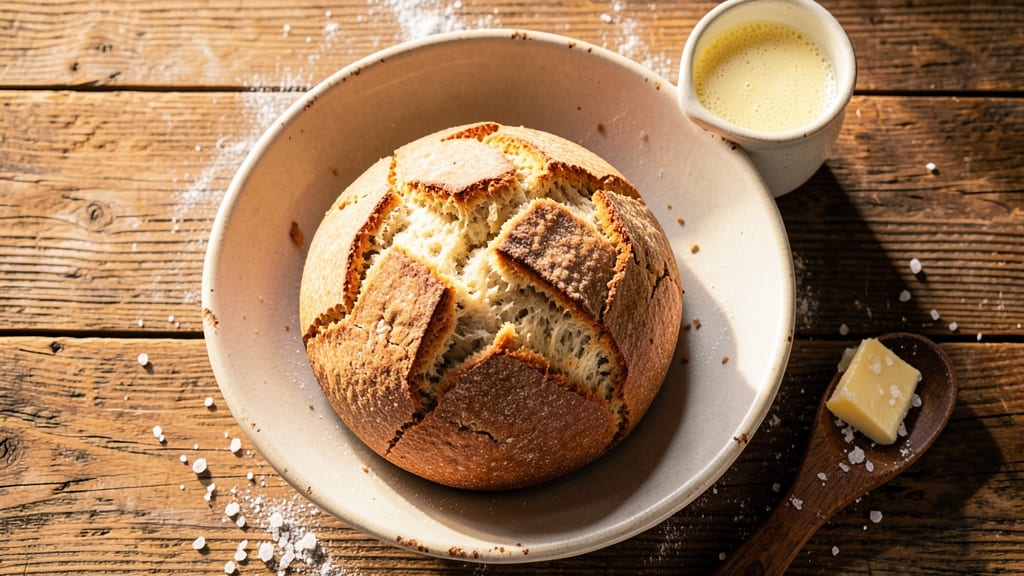
This American soda bread recipe delivers the rustic, hearty texture that makes it a Southern kitchen staple—no yeast, no kneading, just a simple mix of flour, baking soda, and buttermilk that transforms into a golden loaf with a tender crumb.
The secret lies in the buttermilk's tangy acidity, which activates the baking soda for a perfect rise without yeast. I've perfected this version over years of baking, ensuring every slice stays moist and slightly crisp at the edges.
The beauty of soda bread is its no-knead ease—just mix, shape, and bake. Traditional recipes often call for a quick stir with a wooden spoon, and that's exactly what we're doing here.
The baking soda creates that signature open crumb structure, while the buttermilk keeps the bread tender. This method is foolproof, delivering restaurant-quality results in under an hour with minimal effort.
What you'll end up with is a golden-brown loaf with a rustic, slightly irregular shape—just like Grandma used to make. The texture is dense yet tender, perfect for soaking up butter or jam.
It's the kind of bread that feels like home, with a subtle tang that balances sweet toppings beautifully. Whether you're serving it with soup or spreading it with honey, this bread is a game-changer for any meal.
Best of all, this recipe scales perfectly for gatherings or meal prep. The dough comes together in minutes, and the aroma filling your kitchen as it bakes is worth the wait. Let's get started on this classic American staple that's easier than you think.
Ingredients for american soda bread
Nine simple ingredients transform into rustic, golden soda bread with no yeast or kneading.
| Ingredient | Amount | Notes |
|---|---|---|
| All-Purpose Flour 🌾 | 4 cups | Unbleached preferred for best texture |
| Baking Soda 🧂 | 1 tbsp | Pure, uncoated baking soda |
| Buttermilk 🥛 | 1 ½ cups | Full-fat for best flavor (or sub plant-based) |
| Salt 🧂 | 1 tsp | Fine sea salt preferred |
| Unsalted Butter 🧈 | ½ cup | Cold, cubed for easy mixing |
| Granulated Sugar 🍚 | ½ cup | White or brown sugar works |
| Milk 🥛 | ¼ cup | Any kind, room temperature |
| Fresh Chives 🌿 | 2 tbsp | Chopped, for garnish (optional) |
| Coarse Sea Salt 🧂 | 1 tbsp | For sprinkling on top |
The flour is your foundation—King Arthur or Gold Medal are my go-tos for that signature tender crumb. Baking soda is non-negotiable here; Albertsons or Bob's Red Mill brands work perfectly. For buttermilk, I always grab Land O'Lakes—the tang is just right. If you're using plant-based buttermilk, make sure it's unsweetened. The butter? Plugrá or Land O'Lakes unsalted melts beautifully without overpowering. Pro tip: keep everything cold until mixing to prevent overdevelopment.
No buttermilk? Mix 1 tbsp vinegar or lemon juice with 1.5 cups milk and let sit 5 minutes. Short on butter? Olive oil at half the amount works in a pinch, though texture will differ slightly. The sugar can be swapped for honey or maple syrup if you prefer. Chives are optional but add a lovely fresh finish—dried chives at one-third the amount work if fresh aren't available. For a sweeter loaf, add 1 tbsp cinnamon or 0.25 cup raisins to the dough before baking.
This dough keeps in the fridge for 2 days wrapped tightly, or freeze for 3 months in portions. For best results, shape the dough just before baking—it's that quick! The bread stays fresh for 3-4 days at room temperature, wrapped in a cotton towel. Slice with a serrated knife for clean cuts. Leftovers? Toast them for a crispy breakfast treat—trust me, they're even better the second day.
Why You'll Love This Recipe
- No Mixer Needed: I swear by this—just flour, buttermilk, and a pinch of baking soda. No kneading, no fuss, no waiting for dough to rise. The buttermilk’s tang cuts through the richness of the butter, and the baking soda does all the work while I’m still scraping the bowl.
- Tangy, Buttery Magic: That first pull-apart bite? The crust crackles just enough, and the inside stays soft and pillowy—thanks to the butter melting into the flour while the baking soda keeps it light. It’s like a hug in bread form, especially when still warm.
- Weeknight Hero: I make a loaf on Sundays and freeze half. Toast it straight from frozen for breakfast, or serve it with soup when I’m too tired to cook. The buttermilk keeps it moist even after days in the fridge, and the salt balances everything perfectly—no fancy seasoning required.
- Pocketbook-Friendly Staple: Flour, butter, and buttermilk? That’s it. No specialty ingredients, no markup. I can feed my family a hearty loaf for under $3, and the leftovers last forever. Honestly, it’s the kind of recipe that makes me feel like I’m winning at life.
Step-by-step instructions for American soda bread
Here's how to make this classic buttermilk bread with perfect texture every time.
Mix the Wet Ingredients
In a large mixing bowl, combine the 1.5 cups buttermilk, 0.5 cup granulated sugar, 0.25 cup milk, and 1 tsp salt. Stir until the sugar dissolves completely. This mixture should be smooth and well-blended—no lumps allowed.
Next, add the 0.5 cup cold unsalted butter, cut into small cubes. Gently stir with a wooden spoon until the butter melts and incorporates into the liquid. The mixture will look creamy and slightly thickened, almost like a rich batter. This step creates the tender crumb that makes soda bread so satisfying.
Combine Dry Ingredients
In a separate bowl, whisk together the 4 cups all-purpose flour and 1 tbsp baking soda. The baking soda is what gives this bread its signature rise, so don't skip mixing it evenly with the flour. This dry mixture should be completely homogeneous—no flour pockets remain.
With the mixer on low speed, gradually add the dry ingredients to the wet mixture. Mix just until combined—about 30-45 seconds—until you have a shaggy, sticky dough. Overmixing develops gluten, which can make the bread tough. You'll know it's ready when the dough pulls away from the sides of the bowl but still looks slightly uneven.
Shape and Prepare the Dough
Turn the dough out onto a lightly floured surface and gently shape it into a round loaf. Don't worry if it's not perfect—this bread doesn't need to be fancy. Press the dough into a 1-inch thick circle, about 8 inches in diameter. The thickness ensures even baking and a crisp crust.
Transfer the dough to a parchment-lined baking sheet. Here's the trick: sprinkle the 1 tbsp coarse sea salt evenly over the top, then scatter the 2 tbsp chopped fresh chives on top. The salt creates that beautiful crust, while the chives add a fresh, herby accent. If you're feeling fancy, you can also make a small well in the center for a cross-shaped cut.
Bake to Golden Perfection
Preheat your oven to 400°F and let it fully heat for 15 minutes before baking. Place the dough in the center rack and bake for 35-40 minutes, until the top is deep golden brown and sounds hollow when tapped. The bread should spring back slightly when pressed.
This is where patience pays off—don't open the oven door early. The bread needs that hot, dry air to develop its signature crust. When the timer goes off, let the bread cool on the baking sheet for 10 minutes before transferring it to a wire rack. The cooling process helps the crumb set properly, preventing a gummy texture.
Pro Tips For Making American Soda Bread
- MEASURE BUTTERMILK ACCURATELY: Use a liquid measuring cup—pour it in, then eyeball the level at the meniscus (the dip at the top). Buttermilk’s thickness varies, and guessing leads to dense bread. I learned this the hard way when my first batch turned out like a brick.
- STOP WHEN THE TOP SPRINGS BACK: Tap the loaf lightly—it’s done when the top springs back fast (not slow) and sounds hollow. Overbaking dries it out; underbaking leaves a gummy center. I used to pull it too soon, and the crumb felt raw.
- SALT THE BUTTERMILK FIRST: Mix the salt into the buttermilk before adding it to the flour. This ensures even distribution, especially if your butter is unsalted. I skipped this once and got a bland, uneven flavor—now I salt it upfront.
- USE A DULL KNIFE FOR SCORING: A sharp knife tears the dough; a dull one makes clean, crisp cuts. Drag it straight down (no zigzags) about ½ inch deep. My first attempts looked messy, but a single deep cut lets the bread expand properly.
Dietary considerations for these flavors
Gluten-Free Adaptation
For a gluten-free version, replace the 4 cups all-purpose flour with a 1:1 gluten-free baking blend like King Arthur Measure for Measure. Add 1 extra tbsp xanthan gum to the dry ingredients to mimic gluten's structure.
Use 1.75 cups gluten-free flour instead of 4 cups regular flour—gluten-free blends absorb less liquid. The buttermilk and baking soda ratios stay the same, but expect a denser crumb. 🌾
Dairy-Free Options
Swap the 1.5 cups buttermilk for 1.5 cups unsweetened almond milk with 1 tbsp vinegar or lemon juice added. Replace the 0.5 cup butter with 0.5 cup coconut oil (solid at room temperature) or 0.5 cup olive oil.
The texture will be slightly denser but still tender. For richness, add 1 tbsp melted dairy-free butter (like Miyoko's) to the wet ingredients. 🥛
Lower-Carb Version
Reduce the 0.5 cup sugar to 2 tbsp and replace 1 cup all-purpose flour with 1 cup almond flour. Add 1 extra tbsp baking soda to compensate for the reduced gluten. The bread will be denser but still delicious.
For extra flavor, add 1 tsp cinnamon or 0.25 cup chopped walnuts. This version has about 12g net carbs per slice instead of 20g. 🍚
Vegan-Friendly
Use 1.5 cups unsweetened soy milk with 1 tbsp apple cider vinegar instead of buttermilk. Replace the 0.5 cup butter with 0.5 cup vegan butter (like Miyoko's) or 0.5 cup coconut oil.
For binding, add 1 tbsp ground flaxseed mixed with 3 tbsp water to the wet ingredients. The bread will be slightly denser but still moist. 🌱
Nut-Free Allergy
Skip almond flour in lower-carb versions and use 1 cup oat flour (certified gluten-free if needed) instead. For nut-free binding, add 1 tbsp psyllium husk powder to the dry ingredients. The psyllium improves texture without nuts. Always check labels on gluten-free blends for cross-contamination warnings. 💡
Nutrition facts
Frequently asked questions
Why does American soda bread need baking soda instead of yeast?
Baking soda creates an instant chemical reaction with the buttermilk's acidity, producing carbon dioxide gas that makes the bread rise quickly—no waiting for yeast activation! This gives soda bread its signature open crumb and crisp crust in just 35-40 minutes. The reaction also gives it that subtle tangy flavor you can't get with yeast.
Can I make this bread without buttermilk?
Mix 1 tbsp lemon juice or vinegar with 1.5 cups milk and let sit for 5 minutes to mimic buttermilk's acidity. For extra richness, add 1 tbsp melted butter to the wet ingredients. The texture will be slightly less tender but still delicious.
How do I fix a dense soda bread?
Dense bread usually means overmixing or underbaking. For future batches, mix just until combined (30 seconds) and bake 5-10 minutes longer at 400°F. If it's already baked, slice thinly and toast—this often improves texture. Also check your baking soda is fresh (old baking soda loses potency).
What's the best way to store leftovers?
Wrap cooled bread in a cotton towel or beeswax wrap and store at room temperature for 3-4 days. For longer storage, freeze slices wrapped in plastic for up to 3 months. To revive stale bread, sprinkle with water and warm in a 300°F oven for 5-10 minutes.
Can I add other ingredients like cheese or herbs?
Yes! Try adding 1 cup shredded cheddar (folded into the dough) or 1 tbsp dried rosemary for flavor. For sweet versions, mix in 0.5 cup raisins or chocolate chips. Just remember: these additions may slightly reduce rise time, so check for doneness at 30 minutes.