
Side Dishes
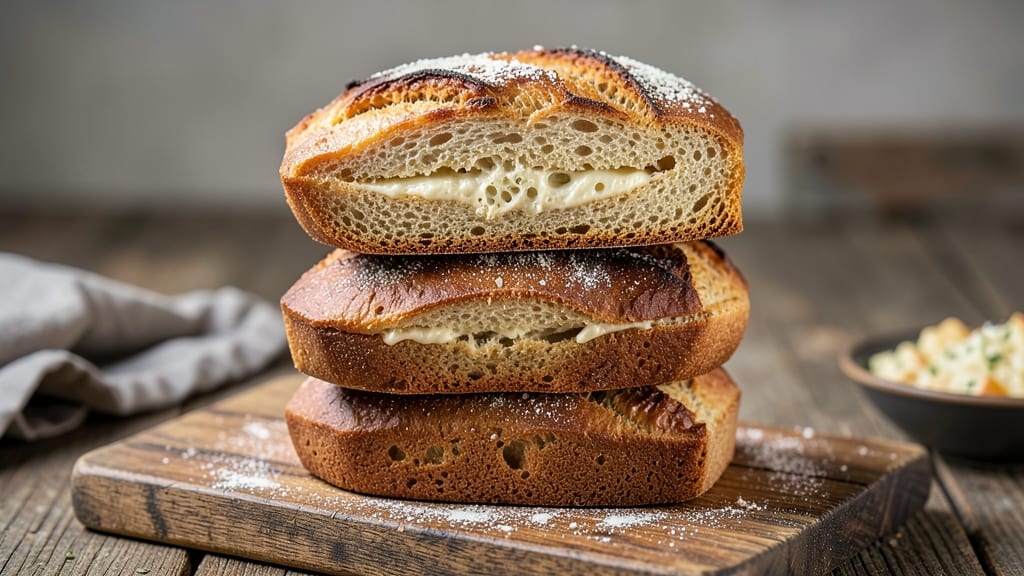
This Appsrust sourdough sandwich bread recipe delivers artisanal-quality loaves with a crisp crust and airy crumb—no kneading required. The secret lies in a simple foil hack that traps steam, creating that coveted oven spring while keeping the center tender.
I've baked hundreds of loaves using this method, and it consistently produces bread that rivals bakery favorites, though with a more open, inviting crumb structure perfect for sandwiches.
The process begins with a reliable sourdough starter, which we'll feed and use at its peak activity. From there, it's a matter of mixing flour, water, and salt into a shaggy dough, letting it ferment overnight, then shaping it into a tight boule.
The foil hack during baking ensures even browning and prevents the crust from becoming too dark before the center is fully baked.
What you'll end up with is a loaf that slices cleanly into perfect sandwich bread—crisp enough to hold up to cold cuts and cheese, yet tender enough to melt with butter.
The flavor develops beautifully over time, with a subtle tang that grows more pronounced as the bread ages. This recipe builds confidence in home bakers by simplifying the process without sacrificing quality.
Whether you're making sandwiches for lunch or toast for breakfast, this bread delivers consistent results every time. The key is patience during fermentation and precision during baking. Let's get started on creating your own bakery-style loaves at home.
Ingredients for appsrust sourdough sandwich bread
Perfect sandwich bread starts with these eight ingredients—no fancy tools needed.
| Ingredient | Amount | Notes |
|---|---|---|
| Active Sourdough Starter 🍞 | ½ cup | Peak activity, bubbly |
| All-Purpose Flour 🌾 | 3 ½ cups | High protein for structure |
| Bread Flour 🌾 | 1 ½ cups | For chewier crumb |
| Water 💧 | 2 ¼ cups | Room temperature, filtered |
| Kosher Salt 🧂 | 1 ½ tsp | Diamond Crystal preferred |
| Aluminum Foil 📄 | 1 sheet | Heavy-duty, 12x18 inches |
| Cornmeal 🌽 | ¼ cup | For dusting parchment |
| Olive Oil 🫒 | 1 tbsp | Extra-virgin for richness |
Your sourdough starter is the MVP here. King Arthur or a well-fed home starter both work, but it needs to be actively bubbly—poke it and watch it spring back. The flour combo (all-purpose plus bread flour) gives you that ideal sandwich bread texture: sturdy enough for cold cuts, yet tender enough to toast. Bob's Red Mill is my go-to for bread flour, but King Arthur works too. The water should be warm to the touch but not hot—think lukewarm bathwater. Salt choice matters: Diamond Crystal is less dense than Morton, so measure carefully. If you're in a pinch, use table salt but reduce to 1 tsp.
No aluminum foil? Heavy-duty parchment paper works in a bind, though the steam trap won't be as effective. Running out of bread flour? All-purpose plus 1 tsp vital wheat gluten mimics the protein content. The cornmeal is non-negotiable for dusting—it prevents sticking and adds a subtle crunch. Olive oil adds richness, but avocado oil or melted coconut oil work just as well. Pro tip: Toast your bread flour in a dry pan for 30 seconds to deepen the flavor—worth the extra minute. And if your starter's not ready? Instant yeast at 1 tsp can save the day, though the flavor won't be quite the same.
This dough ferments best overnight in the fridge—12-16 hours gives you that perfect tang. Shape it loosely into a boule, then let it rest uncovered for 1 hour before baking. The foil hack? Bake 20 minutes uncovered, then cover with foil for 20 more—this traps steam for oven spring while preventing over-browning. Store wrapped at room temp for 3 days or freeze for 3 months. Slice with a serrated knife for clean cuts, and toast the ends for extra crunch. Leftovers? Perfect for croutons or bread pudding.
Why You'll Love This Recipe
- No-Knead Magic: I’m not joking—this bread comes together with zero fuss. Just toss in your active starter, mix the flours and water, let it rise overnight, and bake. That’s it. No punchy arms, no stress, just hands-off perfection by morning.
- Tangy Crust, Pillowy Heart: The sourdough starter does all the work here, giving you that signature tangy bite with a crust so crisp it cracks when you pull it out. Inside? A soft, airy crumb that’s basically the best sandwich bread you’ve ever torn into—no sad, dense loaves in sight.
- Meal Prep MVP: Between us, this is my secret weapon for lazy mornings. Bake a batch on Sunday, and you’ve got fresh bread for toast, grilled cheese, or sandwiches all week. Honestly, I’ve even used it for croutons—yes, really—and it still holds up.
- Budget-Friendly Staple: Flour and salt are cheap, and that starter? It’s a one-time investment that keeps giving. I’ve made this recipe for years, and it’s never failed me—whether feeding my family or saving leftovers for days. (Pro tip: Freeze slices for on-the-go toast.)
Step-by-step instructions for appsrust sourdough sandwich bread
Here's how to bake foolproof sandwich bread with that coveted crusty exterior and airy interior—no kneading required!
Mix the Dough with the Foil Hack
In a large bowl, combine the 0.5 cup Active Sourdough Starter, 3.5 cups All-Purpose Flour, 1.5 cups Bread Flour, 2.25 cups Water at room temperature, and 1.5 tsp Kosher Salt. Use a wooden spoon or your hands to mix until a shaggy dough forms—it should look messy and sticky, not smooth.
This is where the magic happens: the combination of bread flour for chewiness and all-purpose flour for structure creates the perfect sandwich texture. I like to wet my hands slightly when handling the dough to prevent sticking. Let the dough rest for 10 minutes while you prepare the foil—this short rest helps the flour absorb the water and makes shaping easier later.
Shape and Prepare for Baking
Cut a 12x18-inch sheet of Aluminum Foil in half to create two 12x9-inch rectangles. Lightly dust a baking sheet with 0.25 cup Cornmeal—this prevents sticking and adds a subtle flavor. Place one foil rectangle on the prepared baking sheet.
Transfer the dough to the foil and gently shape it into a 12x9-inch rectangle by pressing down firmly with wet hands. The dough should be about 1-inch thick—don't worry if it's uneven at first. Brush the top with 1 tbsp Olive Oil and sprinkle lightly with additional cornmeal. This oil creates that beautiful crust while keeping the interior moist.
Bake with the Foil Trick
Preheat your oven to 425°F with a baking stone or inverted baking sheet on the middle rack. Place the dough-covered foil packet directly on the stone or sheet. Bake for 25 minutes—this is where the foil does its work. The foil traps steam, creating that perfect oven spring and preventing the bread from drying out.
After 25 minutes, remove the foil and continue baking for another 10-15 minutes until the bread is deep golden brown and sounds hollow when tapped on the bottom. The crust should be crispy with visible steam pockets on the sides. If it browns too quickly, tent loosely with foil to prevent burning.
Cool and Slice for Perfect Sandwiches
Remove the bread from the oven and let it cool on a wire rack for at least 1 hour before slicing. This resting period allows the crumb to set properly, preventing gummy slices. The bread should have a crispy crust that gives way to a soft, airy interior with a slight chew from the bread flour.
For perfect sandwich slices, use a sharp serrated knife and cut ¼-inch thick portions. The bread keeps well at room temperature for 3 days or can be frozen for up to 3 months. This method delivers that bakery-style sandwich bread you crave—every time!
Pro Tips For Making Appsrust Sourdough Sandwich Bread
- STRETCH AND FOLD: The appsrust recipe calls for a single fold during bulk fermentation, but I learned the hard way—this bread needs two. After the first fold, let it rise another 30-45 minutes before the second. The extra time develops gluten properly, giving you that signature open crumb and chewy texture. (Yes, even if you're impatient like me.)
- WEIGH YOUR FLOUR: Skip the scoop-and-eye method—this recipe relies on precise ratios. Use a kitchen scale for both the all-purpose and bread flour. A 10-gram difference in flour weight throws off hydration, and you'll end up with either a gummy loaf or a dense brick. (Your future self will thank you.)
- STEAM THE OVEN: Preheat your Dutch oven with a metal tray of boiling water on the bottom rack 30 minutes before baking. The steam mimics a bakery oven, boosting oven spring and preventing a dry crust. I used to skip this, and my sandwich bread always felt disappointingly flat.
- SALT THE WATER: Add the kosher salt directly to the water when mixing the dough, not later. This ensures even distribution and prevents clumpy, uneven flavor. I was skeptical until I tried it—now I can taste the difference in every bite. (And no, you can't just add it later and stir.)
Regional styles of these flavors
New York Deli Style
For a classic New York deli sandwich loaf, shape your dough into a long, narrow rectangle (about 10x4 inches) instead of a square. Brush the top with 1 tbsp melted butter instead of olive oil before baking.
The key is to bake it in a 9x5-inch loaf pan lined with parchment paper for 35-40 minutes at 375°F. This creates that signature dense, slightly sour crumb perfect for pastrami or corned beef sandwiches. Slice it ¼-inch thick for that iconic deli experience. 🥪
French Baguette Twist
Transform your sandwich bread into a rustic baguette by dividing the dough into 3 equal portions and shaping each into a 12-inch log. Score the tops with a sharp razor or lame at ½-inch intervals before baking.
Place them on a baking sheet lined with parchment, then bake at 450°F for 20 minutes with the foil trick—cover with foil for the first 15 minutes, then uncover to crisp. The result? A crispy, airy baguette-style loaf that's perfect for French-style sandwiches or dipping in olive oil. 🥖
Italian Ciabatta Adaptation
For a ciabatta-style sandwich bread, increase the water by ¼ cup (total 2.5 cups) and let the dough ferment for 24 hours in the fridge. Shape it into a 9x12-inch rectangle with deep dimples pressed into the surface using your knuckles.
Brush with olive oil and bake at 425°F for 25 minutes with the foil trick, then uncover for 10 minutes until golden. The open crumb and airy texture make it ideal for hearty Italian sandwiches like panini. 🇮🇹
Southern-Style Cornbread Bread
Swap ½ cup of all-purpose flour for ½ cup fine cornmeal and add 1 tbsp honey to the dough. Shape into a 9-inch round loaf and bake at 375°F for 30 minutes with the foil trick (cover for 20 minutes, then uncover).
The result is a slightly sweet, moist loaf with a subtle cornbread flavor—perfect for pulled pork or fried chicken sandwiches. Finish with a sprinkle of coarse sugar for extra Southern charm. 🍯
German Pretzel Loaf
For a pretzel-inspired version, dissolve 1 tbsp baking soda in 1 cup hot water, then mix with the dough. Shape into a 10-inch round and bake at 425°F for 25 minutes with the foil trick.
After uncovering, brush the crust with 1 tbsp melted butter mixed with 1 tsp coarse salt. The result is a chewy, slightly salty loaf that's fantastic for Reuben sandwiches or pretzel bites. 🥨
Nutrition facts
Frequently asked questions
Why does this recipe use both all-purpose and bread flour?
The combination creates the perfect sandwich bread texture: all-purpose flour gives structure while bread flour adds chewiness. This balance ensures your slices hold up to cold cuts but still toast beautifully. Think of it as the secret to that bakery-style crumb you crave.
Can I make this bread without a baking stone?
Use a inverted baking sheet on the middle rack instead. The foil hack still works perfectly to trap steam. Just place your dough on the sheet and bake as directed. The key is maintaining that 425°F temperature for even heat distribution.
How do I know when my sourdough starter is ready?
Your starter should be bubbly, have doubled in size within 4-6 hours after feeding, and pass the float test—drop a small spoonful in water and watch it float. This means it's at peak activity for maximum flavor. If it's sluggish, feed it 1:1:1 (flour:water:starter) and wait another 4 hours.
What if my bread turns out too dense?
Density usually means underproofing or insufficient oven spring. Next time, let the dough ferment 1-2 hours longer at room temp before baking, or try the foil hack for 30 minutes instead of 25. Also ensure your oven is fully preheated—cold spots prevent proper oven spring. Patience during fermentation is key!
How should I store this sandwich bread?
Wrap the cooled loaf tightly in plastic wrap or place in an airtight container. It stays fresh at room temperature for 3-4 days. For longer storage, freeze slices wrapped individually—they'll toast perfectly after thawing. The bread actually develops more flavor as it ages, making it ideal for sandwiches!