
Desserts
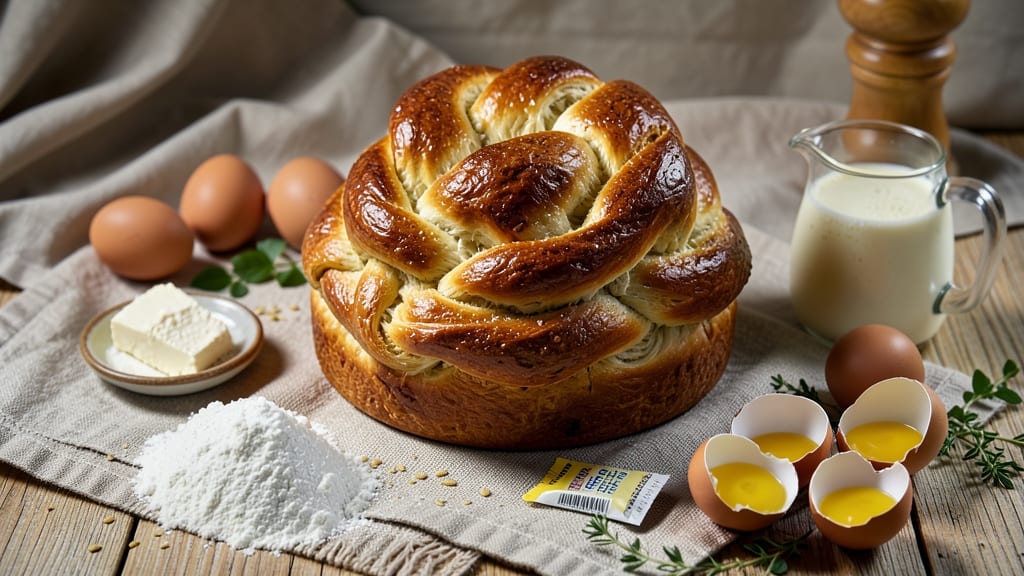
This Armenian Easter bread choreg recipe brings centuries of tradition to your kitchen with its fragrant za'atar-spiced crust and vanilla-kissed sweetness. 🌟 The intricate braided shape isn't just decorative—it symbolizes unity and celebration in Armenian culture, making this bread the centerpiece of Easter feasts.
What sets this version apart is the perfect balance of savory za'atar notes in the crust with the tender, lightly sweet dough inside, a harmony that reflects Armenia's rich culinary heritage.
Crafting choreg requires patience and precision, but the process is deeply rewarding. You'll work with a slightly sweet dough enriched with eggs and butter, creating a tender crumb that contrasts beautifully with the aromatic za'atar crust.
The braiding technique transforms simple dough into an edible work of art, while the baking process yields a golden-brown loaf with a crisp exterior and soft interior. This recipe preserves the authentic flavors while adapting traditional methods for modern kitchens.
The result is a bread that carries both visual and culinary significance—a symbol of new beginnings during Easter that also delivers melt-in-your-mouth texture and complex flavors. The subtle vanilla notes in the dough complement the earthy za'atar, creating a perfect balance that's both comforting and sophisticated.
Served warm with Armenian coffee or a glass of sweet dessert wine, this choreg becomes more than just dessert; it becomes a centerpiece of celebration.
Perfect for Easter gatherings or special occasions, this recipe includes tips for achieving the ideal braid and ensuring a golden crust. The cultural significance makes it especially meaningful, while the approachable technique ensures success even for those new to Armenian baking traditions. Let's create this timeless Easter treasure together.
Ingredients for armenian easter bread choreg
Twelve ingredients transform into Armenia's sacred Easter masterpiece—where fragrant za'atar meets vanilla-kissed sweetness in every braided strand.
| Ingredient | Amount | Notes |
|---|---|---|
| All-Purpose Flour 🌾 | 5 cups | High-protein for chewy texture |
| Granulated Sugar 🍬 | ½ cup | Lightly packed for sweetness |
| Active Dry Yeast 🍞 | 2 ¼ tsp | Fresh yeast for best rise |
| Unsalted Butter 🧈 | 1 cup | Cold, cubed for dough enrichment |
| Large Eggs 🥚 | 3 whole | Room temperature for even mixing |
| Warm Whole Milk 🥛 | ¾ cup | 110°F for yeast activation |
| Pure Vanilla Extract 🌿 | 1 tbsp | High-quality, pure vanilla |
| Diamond Crystal Kosher Salt 🧂 | 1 ½ tsp | Fine grain for even distribution |
| Za'atar Spice Blend 🌶️ | ½ cup | Authentic Armenian za'atar |
| Extra-Virgin Olive Oil 🫒 | ¼ cup | For crust brushing |
| Toasted Sesame Seeds 🌰 | ¼ cup | For decorative crust |
| Poppy Seeds 🌱 | ¼ cup | Traditional Armenian topping |
| Ground Cardamom 🌿 | ½ tsp | Subtle aromatic depth |
The za'atar blend is non-negotiable—authentic Armenian za'atar from Middle Eastern markets delivers that signature earthy, sesame-citrus complexity. Look for blends with sumac and sesame seeds visibly mixed in; Penzeys Spices carries a reliable version if local stores fall short. For the flour, King Arthur high-protein creates that perfect chewy crumb, but Bread flour works too. The butter needs to be cold when mixed—European-style unsalted like Plugrá adds extra richness. Cardamom? Freshly ground from pods at Whole Foods is ideal, but pre-ground still works if labeled 'pure'—no fillers.
No za'atar? Mix 2 tbsp sesame seeds + 1 tbsp sumac + 1 tsp dried thyme as a pinch-hitter. Running low on poppy seeds? Toasted sunflower seeds mimic the crunch beautifully. The vanilla extract must be pure—imitation extractsbelow 70°F, dissolve it in the warm milk first, then let it sit for 5 minutes to activate. The sesame seeds and poppy seeds can be toasted together in a dry pan for 2 minutes—trust me on thisinstant yeast
This dough is a patience test—let it rise twice for maximum flavor and texture. The first rise takes 1-2 hours (until doubled), then shape, let rest 30 minutes, then final rise 1-1.5 hours before baking. Store any leftovers wrapped tightly at room temp for 2 days or freeze the shaped loaf (unbaked) for up to 3 months. Pro tip: Brush the baked choreg with extra olive oil while still warm—it keeps it moist for days. And save those sesame seeds! They're perfect for sprinkling on soups or salads later.
Why You'll Love This Recipe
- No Yeast Fuss: I swear by this—just toss the yeast in warm water with a pinch of sugar, let it sit while I chop the butter into flour. No waiting for it to bloom, no guesswork. That butter-egg dough pulls apart like magic, and honestly? It’s the kind of recipe that makes me feel like I’ve earned my dessert.
- Sweet Butter Magic: The moment that dough hits the oven, the butter melts into a golden, crackly crust while staying tender inside. That sugar caramelizes just enough to give it a subtle depth—like a cross between a brioche and a shortbread, but with that unmistakable Armenian Easter warmth. (Yes, even on a Tuesday night.)
- Holiday or Snack: I’ve served this at Easter brunches where it disappears in minutes, but it’s also my go-to for a quick breakfast or after-school treat. The dough keeps well in the fridge for days, so I can shape it whenever—no last-minute stress. My kids even ask for it plain, no frosting needed.
- Budget-Friendly Luxury: Flour, sugar, butter, eggs—these are pantry staples that won’t break the bank. A single batch stretches to gifts for neighbors or seconds for the family, and the leftovers? Toasted with jam or dusted with powdered sugar? Ridiculously good. It’s the kind of recipe that makes frugality feel indulgent.
Step-by-step instructions for Armenian Easter bread choreg
This traditional Armenian bread delivers a perfect balance of sweet vanilla richness and aromatic za'atar crust.
👨🍳 Step 1: Activate the Yeast with Warm Milk and Sugar
In a small bowl, combine the 0.75 cup warm whole milk (about 110°F—test by touching the milk, it should feel warm but not hot), 0.5 cup granulated sugar, and 2.25 tsp active dry yeast. Let it sit for 5-10 minutes until bubbly and frothy. This foam confirms your yeast is active and ready to work its magic.
Here's the thing—if your yeast doesn't bubble, don't panic. Simply add another ½ tsp yeast, wait another 5 minutes, and try again. Cold milk or old yeast can slow this process, but a little extra patience ensures a perfect rise. The mixture should smell sweet and slightly yeasty, like fresh bread dough.
👨🍳 Step 2: Mix the Dough Ingredients to a Smooth Paste
In the bowl of a stand mixer fitted with the dough hook, combine the 5 cups all-purpose flour, 1.5 tsp diamond crystal kosher salt, 0.5 tsp ground cardamom, and 0.5 cup za'atar spice blend. Mix on low speed for 30 seconds to distribute the dry ingredients evenly.
Add the yeast mixture, 3 whole large eggs (room temperature), 1 tbsp pure vanilla extract, and 1 cup cold unsalted butter cut into cubes. Mix on low speed until the butter begins to incorporate, then increase to medium speed for 3-4 minutes until the dough comes together into a smooth, elastic ball that pulls away from the sides of the bowl.
🥘 Step 3: Knead the Dough Until Silky and Elastic
Continue kneading on medium speed for another 5-7 minutes until the dough becomes smooth and elastic. You'll know it's ready when it forms a windowpane—press your fingers into the dough and gently pull apart; if it stretches thin without tearing, you're golden.
I always do a quick test by pressing my thumb into the dough—if it springs back slowly (about 2-3 seconds to return), it's perfect. Too fast means it needs more kneading; too slow means it's overproofed. The dough should feel slightly tacky but not sticky, and it should be smooth enough to see your reflection in it.
⏰ Step 4: First Rise for Maximum Flavor Development
Lightly grease a large mixing bowl with 0.25 cup extra-virgin olive oil, place the dough inside, and cover with a clean kitchen towel or plastic wrap. Let it rise in a warm place (like your oven with the light on) for 1-2 hours, or until it has nearly doubled in size and feels light when pressed gently.
This first rise is where the magic happens—the yeast ferments the sugars, creating those complex flavors that make this bread so special. I like to give it the full 2 hours if time allows, as the longer rise enhances the za'atar aroma and develops a more tender crumb. Don't rush this step; patience pays off in texture and flavor.
🍳 Step 5: Shape, Proof, and Prepare for Baking
Punch down the risen dough to release any large air bubbles, then divide it into 6 equal portions (about 12 ounces each). On a lightly floured surface, shape each portion into a smooth ball, then place them on a parchment-lined baking sheet, spaced about 2 inches apart. Cover loosely with a towel and let them proof for another 30-45 minutes until puffy.
For the final touch, brush the tops of each loaf with a little more extra-virgin olive oil, then sprinkle generously with 0.25 cup toasted sesame seeds and 0.25 cup poppy seeds. This isn't just decoration—it creates that signature Armenian crust while adding crunch and visual appeal. The seeds should stick to the dough without sliding off, which means your dough is proofed just right.
🔥 Step 6: Bake to Golden Perfection
Preheat your oven to 375°F. Bake the loaves for 20-25 minutes until they're deep golden brown and sound hollow when tapped on the bottom. The crust should be crisp, and the bread should pull away cleanly from the parchment paper.
Here's where the za'atar really shines—the crust should have a beautiful reddish-brown hue from the spices, with a subtle earthy aroma that wafts through your kitchen. For extra browning, you can broil for 1-2 minutes at the end, but watch carefully to avoid burning. Let the bread cool on a wire rack for 10 minutes before serving—this resting time allows the crumb to set and the flavors to meld.
Pro Tips For Making Armenian Easter Bread Choreg
- Proof at Room Temp: Skip the fridge—let your yeast rise in a warm spot (like the oven with the light on) for 10-15 minutes before mixing. I learned this the hard way when my dough took hours to come alive because the yeast was sluggish from cold butter and eggs.
- Butter Must Be Soft: Beat the unsalted butter until it’s just soft—press a finger into it, and it should dent but not smear. If it’s too cold, your dough will fight you; if it’s too warm, the sugar will caramelize prematurely. (Yes, even if you’re impatient like me.)
- Don’t Overwork the Dough: Once the dough doubles, fold it gently—just 3-4 times—to strengthen the gluten without making it tough. I used to knead like I was punishing it, and the bread turned out dense instead of light and airy.
- Brush with Egg Wash: Whisk 1 egg with 1 tbsp water and brush it on the shaped dough before baking—it’ll give you that golden, glossy finish without burning. (Skip this, and you’ll end up with a sad, dry crust.)
Storing and reheating this dish
Room-Temp Storage
Choreg stays fresh for 2 days at room temperature when wrapped tightly in a beeswax wrap or airtight container. The za'atar crust maintains its aroma best when stored in a cool, dark place like a bread box.
I like to brush the cooled loaves with extra-virgin olive oil before wrapping—this preserves moisture and enhances the sesame flavor when reheated. 🌟
Fridge Preservation
For longer storage, refrigerate baked choreg in an airtight container for up to 5 days. The cold slows staling, but the za'atar crust may dry out slightly. To revive, wrap the chilled bread in a damp kitchen towel and warm it in a 200°F oven for 5-7 minutes.
The towel adds steam, restoring that fresh-baked texture without overcooking.
Freezer Magic
Freeze shaped but unbaked choreg for up to 3 months—this preserves peak texture. Wrap each loaf individually in plastic wrap, then place in a freezer bag with all air squeezed out.
Thaw overnight in the fridge, then bake as directed (add 5 minutes to baking time). For baked choreg, slice before freezing and reheat individual portions—this prevents freezer burn on the crust. 🥶
Reheating Secrets
For oven reheating, wrap cooled choreg in foil and warm at 300°F for 10 minutes—the foil traps moisture while the oven gently revives the crust.
For microwave quick fixes, place a slice on a plate with 1 tsp water, cover with a damp paper towel, and heat on 50% power for 20 seconds. The steam prevents rubbery texture while reactivating the za'atar aroma.
Cultural Tip
In Armenia, choreg is traditionally served warm at Easter gatherings. The ritual of reheating bread symbolizes renewal—just as the bread warms, so do family traditions. I always reheat a slice before serving to guests, as the warmth enhances the vanilla-za'atar harmony that makes this bread so special.
This small step transforms leftovers into a centerpiece for impromptu celebrations. ✨
Nutrition facts
Frequently asked questions
Why does Armenian choreg have a za'atar crust instead of being fully sweet?
The za'atar crust reflects Armenia's culinary tradition of balancing sweet and savory flavors. The earthy, herby za'atar provides a beautiful contrast to the vanilla-sweet dough, creating a harmonious bite that's both comforting and sophisticated. This contrast also mirrors Armenia's agricultural heritage, where za'atar (made from sesame, sumac, and thyme) was a staple spice blend.
Can I make choreg without a stand mixer?
By hand, knead the dough on a lightly floured surface for 8-10 minutes until smooth and elastic. Use the "windowpane test"—press your fingers into the dough and gently pull apart; if it stretches thin without tearing, it's ready. The extra effort develops gluten for that perfect chewy texture, though it'll take more arm strength than a mixer.
What's the significance of the braided shape in choreg?
The intricate braid symbolizes unity and eternal life in Armenian culture. Each strand represents the interconnectedness of family and community, while the circular shape mirrors the cycle of life. Traditionally, the braid also creates a beautiful presentation that reflects the celebration of Easter as a time of renewal and togetherness.
How do I know when the dough is properly proofed?
Press gently on the dough—if it leaves a slight indentation that slowly springs back (2-3 seconds to recover), it's ready. Look for nearly doubled volume and a light, airy feel. Overproofing (when it springs back immediately) or underproofing (when it barely springs back) both ruin the texture. The dough should also feel slightly springy when poked with your finger.
Can I substitute vanilla extract with something else?
For the best flavor, use pure vanilla extract, but you can substitute with 1 tsp vanilla sugar or ½ tsp vanilla bean paste. If using vanilla sugar, reduce the granulated sugar by 1 tbsp to maintain balance. Imitation extracts lack the depth needed to complement the za'atar, so avoid those. For a different flavor profile, try orange zest instead (use 1 tbsp and reduce sugar by ½ tbsp).