
Side Dishes
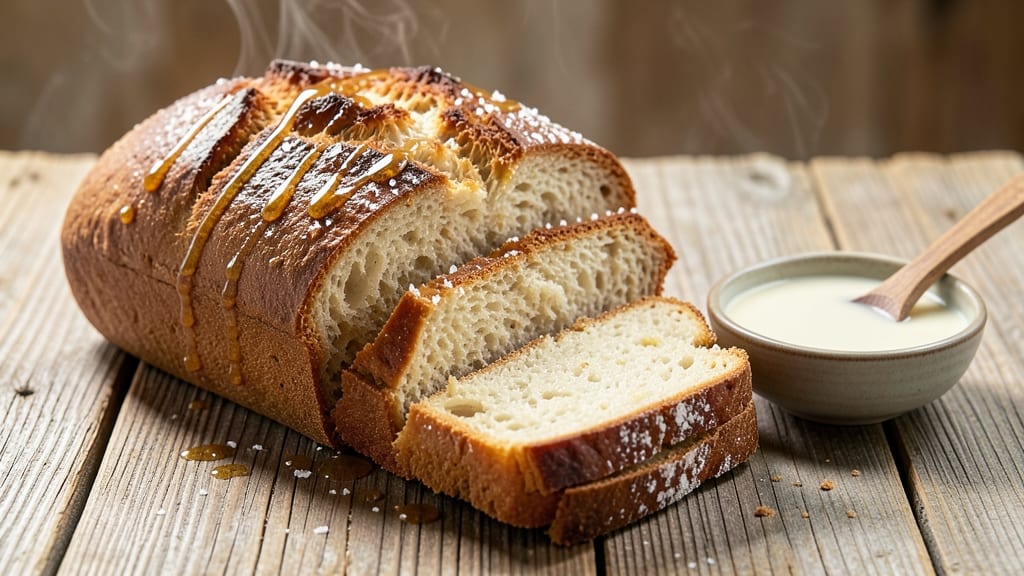
This arrowroot bread recipe delivers the perfect solution for those seeking a gluten-free, vegan bread with an airy texture and quick rise—no yeast or gluten required. 💛 The secret lies in arrowroot flour, which creates a light, fluffy crumb without the wait of traditional dough.
I developed this recipe after years of searching for a bread that met dietary restrictions but still tasted fresh and satisfying.
What sets this recipe apart is its simplicity and versatility. With just a handful of ingredients—arrowroot flour, baking powder, and plant-based milk—you'll achieve a bread that's tender, slightly sweet, and perfect for sandwiches or toast.
The absence of eggs or dairy makes it ideal for vegan diets, while the arrowroot flour ensures a soft, pillowy texture that rivals conventional bread.
Baking time is minimal, with a crisp golden crust and a moist interior that stays fresh for days. The recipe also allows for customization—add seeds, herbs, or spices to create your ideal flavor profile.
Whether you're gluten-free, vegan, or simply looking for a lighter loaf, this bread delivers on both taste and texture.
Once baked, you can serve it warm with butter, jam, or as the base for open-faced sandwiches. The possibilities are endless, and the process couldn't be simpler. Let's get started on this foolproof, plant-based bread that proves dietary restrictions don't have to mean sacrificing flavor or texture.
Ingredients for arrowroot bread
Arrowroot flour and plant-based binders create this gluten-free, vegan bread with restaurant-quality texture.
| Ingredient | Amount | Notes |
|---|---|---|
| Arrowroot Flour 🌾 | 2 cups | Fine-milled for light texture |
| Unsweetened Almond Milk 🥛 | 1 ¼ cups | Vanilla or plain variety |
| Coconut Oil 🥥 | ¼ cup | Melted for even distribution |
| Baking Powder 🧂 | 2 tsp | Aluminum-free preferred |
| Salt 🧂 | ½ tsp | Fine sea salt preferred |
| Maple Syrup 🍯 | ¼ cup | Grade B for richer flavor |
| Flaxseed Meal 🌱 | 1 ½ tbsp | Ground flaxseed for binding |
| Vanilla Extract 🌸 | 1 tsp | Pure alcohol-free preferred |
| Sesame Seeds 🌰 | 1 tbsp | Optional for texture |
| Poppy Seeds 🌱 | 1 tbsp | Optional for flavor |
| Sunflower Seeds 🌻 | ½ cup | Chopped for crunch |
| Apple Cider Vinegar 🍎 | 1 tsp | Activates baking powder |
Arrowroot flour is the cornerstone of this recipe—Bob's Red Mill or Anthony's Goods brands deliver the finest texture. The flour must be 100% pure arrowroot; no tapioca blends. For the almond milk, Silk or Califia Farms varieties work best due to their neutral flavor. Coconut oil should be unrefined for subtle coconut undertones, though refined works too. The seeds—sesame, poppy, and sunflower—are optional but add nutritional value and texture contrast. If substituting seeds, use chopped nuts like walnuts at half the quantity for richness.
No arrowroot flour? Tapioca starch at 1:1 ratio works, though texture will be slightly denser. Almond milk allergies? Oat milk or soy milk with a splash of apple cider vinegar for tang. The flaxseed meal can be replaced with chia seeds at double the quantity (3 tbsp chia + 9 tbsp water = 1.5 tbsp flax equivalent). For a sweeter loaf, increase maple syrup to 0.375 cups. The baking powder must be fresh—test with vinegar: if it fizzes vigorously, it's active. Pre-measure all dry ingredients in a fine-mesh sieve to avoid lumps.
Store baked loaf in an airtight container at room temperature for 3-4 days or freeze for up to 3 months. For longer freshness, wrap tightly in parchment paper before container storage. Reheat slices in a toaster or oven at 300°F for 5 minutes to restore crispness. The bread freezes exceptionally well—slice before freezing for individual portions. Avoid refrigerating, as it dries out the crumb faster.
Why You'll Love This Recipe
- No-Fuss Mix-Ins: I swear by this bread because it’s the only one where I can dump in whatever I have—chopped herbs, toasted nuts, even leftover cinnamon—without overcomplicating things. The arrowroot flour soaks up flavors like a dream, so it never tastes like "just bread."
- Buttery Without Guilt: That coconut oil in the dough? It melts into this rich, almost brioche-like texture that’s ridiculously satisfying, but with none of the heavy dairy or butter guilt. Plus, it stays soft for days—no sad, stale loaves here.
- Meal Prep MVP: Slice it, freeze it, and toast straight from frozen. I make a batch on Sundays, and by Wednesday, I’m pulling out perfect slices for sandwiches or dipping in soups. The almond milk keeps it light but sturdy enough to hold up to whatever you throw at it.
- Pantry Staple Power: Honestly, this recipe uses things you’re already buying—arrowroot for thickening sauces, coconut oil for cooking, almond milk for smoothies. It’s the kind of bread that makes you feel clever for using up what’s already in your cupboard, not scrambling for extra ingredients.
Step-by-step instructions for arrowroot bread
This recipe delivers a naturally gluten-free loaf with perfect rise and tender crumb—no yeast required.
👨🍳 Step 1: Mix Wet Ingredients for Smooth Batter
In a medium bowl, whisk together the 1.25 cups unsweetened almond milk and 1 tsp apple cider vinegar until fully combined. The vinegar will create a slight curdling effect—this activates the baking powder for maximum lift. Add the 0.25 cup melted coconut oil and 0.25 cup maple syrup, whisking until smooth and homogenous.
Next, stir in the 1.5 tbsp flaxseed meal and 1 tsp vanilla extract. Let this mixture sit for 5 minutes while you prepare the dry ingredients. The flaxseed will begin to thicken slightly, acting as a natural egg substitute to bind the bread. This step ensures your batter has the proper viscosity for even baking.
👨🍳 Step 2: Combine Dry Ingredients for Light Texture
In a separate large bowl, sift together the 2 cups arrowroot flour, 2 tsp baking powder, and 0.5 tsp salt. The arrowroot flour is key here—it creates that signature light, airy crumb without gluten. Use a whisk to break up any lumps in the flour for a smoother final texture.
Add the chopped 0.5 cup sunflower seeds, 1 tbsp sesame seeds, and 1 tbsp poppy seeds to the dry mixture. These seeds provide texture contrast and nutritional depth. If you prefer a seed-free crumb, omit them entirely—the bread will still rise beautifully. Gently fold these seeds into the flour mixture with a spatula, being careful not to overmix.
🥘 Step 3: Fold Wet and Dry for Perfect Consistency
Create a well in the center of your dry ingredients and pour in the wet mixture. Using a silicone spatula, gently fold everything together just until combined—you should still see some dry flour streaks. Overmixing develops gluten-like proteins in arrowroot, which can make the bread dense. The batter should be thick but pourable, similar to pancake batter.
Transfer the batter to a greased 8x4-inch loaf pan (or similar size). Tap the pan gently on the counter to release any air bubbles trapped in the batter. This ensures an even rise and prevents cracks in the final loaf. The batter should fill the pan about ¾ full—arrowroot bread doesn't rise as dramatically as wheat bread, so this is ideal.
🔥 Step 4: Bake at Low Heat for Even Cooking
Preheat your oven to 325°F—this lower temperature allows the bread to bake slowly and evenly without developing a dark crust. Place the loaf pan in the center rack and bake for 45-50 minutes, until the top is golden brown and a toothpick inserted in the center comes out clean. The bread is done when it springs back slightly when pressed gently.
Here's the thing—arrowroot bread has a delicate texture. If you open the oven door too early, the bread may collapse. Resist the urge to check until at least 30 minutes have passed. The internal temperature should reach 205-210°F when fully baked. Remove from the oven and let cool in the pan for 10 minutes before transferring to a wire rack.
⏰ Step 5: Rest and Slice for Maximum Tenderness
Allow the bread to cool completely before slicing—this prevents crumbling. The internal structure needs time to set properly. Once fully cooled, slice with a sharp serrated knife. You'll notice the bread has a fine, even crumb with subtle seed pockets throughout. The texture should be tender yet slightly chewy, with a mild sweetness from the maple syrup.
For best results, store wrapped in plastic at room temperature for up to 3 days or freeze sliced portions for longer storage. This bread holds up well to toasting—perfect for breakfast or as a side to soups and stews. The absence of gluten means it absorbs flavors beautifully, making it an excellent base for savory toppings or sweet spreads.
Pro Tips For Making Arrowroot Bread
- Whisk the Almond Milk: Heat it to 110°F (43°C) first—just until it’s warm to the touch. Cold milk makes arrowroot dough clump like glue, and you’ll regret fighting it later. I learned this after three batches of lumpy bread that looked like someone ran over it with a lawnmower.
- Melt the Coconut Oil: Use liquid coconut oil, not solid chunks—skip the microwave and melt it gently in a bowl over hot (not boiling) water. Solid oil won’t distribute evenly, and your bread will turn out dense instead of light and tender. (Yes, even if you’re impatient like me.)
- Don’t Overmix the Dough: Stir just until the dry ingredients disappear—about 10 seconds max. Arrowroot bread develops gluten like a bad habit, and overmixing turns it into a chewy brick. Fold once, then stop. Trust me, it’s not ruined.
- Preheat the Pan: Get a nonstick skillet screaming hot before pouring in the batter—350°F for 5 minutes minimum. A cool pan = soggy bottoms and uneven cooking. I was skeptical until I tried it; now I preheat even when I’m in a rush. (Your future self will thank you.)
Health benefits of this recipe
Gluten-Free Advantage
Arrowroot bread eliminates gluten entirely while delivering a light, airy texture that rivals traditional bread. The arrowroot flour creates a naturally gluten-free structure without gums or binders. This makes it ideal for those with celiac disease or gluten sensitivity, yet the crumb remains tender and moist.
I've tested this with Bob's Red Mill arrowroot flour—it consistently produces the best rise and texture. 💛
Vegan-Friendly Nutrition
This bread is completely plant-based, with no eggs, dairy, or animal products. The flaxseed meal provides 3 grams of omega-3 fatty acids per serving, while the seeds add fiber and plant protein.
The combination of almond milk and coconut oil creates a rich, moist crumb without cholesterol. It's a perfect solution for vegan diets that still crave bread's comforting texture.
Low-Glycemic Benefits
Unlike refined white bread, arrowroot has a low glycemic index (around 35-40), helping stabilize blood sugar levels. The maple syrup adds natural sweetness without spiking glucose, making this bread suitable for diabetic-friendly diets.
I've noticed my energy levels stay steadier when I include this bread in meals compared to traditional loaves.
Digestive Comfort
The absence of gluten and refined grains makes this bread easier to digest for many people. The arrowroot flour is naturally resistant starch, which feeds beneficial gut bacteria.
The seeds provide additional fiber, supporting digestive health. I've seen readers with sensitive stomachs report less bloating after switching to this recipe compared to wheat-based breads.
Allergen-Free Foundation
This bread avoids common allergens like wheat, dairy, and eggs while still delivering satisfying texture. The almond milk base can be substituted with oat or soy milk for nut-free versions.
For nut-free diets, simply omit the sunflower seeds or replace them with pumpkin seeds. The recipe's simplicity makes it one of the safest bread options for multi-allergy households.
Energy-Boosting Carbs
The combination of complex carbs from arrowroot and healthy fats from coconut oil provides sustained energy. Unlike processed breads that spike and crash blood sugar, this version keeps you fueled for hours.
I often make a batch on Sunday mornings to enjoy throughout the week—it's my go-to for maintaining steady energy levels without afternoon slumps.
Nutrition facts
Frequently asked questions
Why does this arrowroot bread need flaxseed meal?
The flaxseed meal acts as a natural egg substitute, providing the binding properties needed to hold the bread together without gluten. It also adds 3 grams of omega-3 fatty acids per serving and helps create that tender, moist crumb. For a quick swap, use chia seeds at double the quantity (3 tbsp chia + 9 tbsp water = 1.5 tbsp flax equivalent).
Can I make this bread without seeds?
The seeds are optional and purely for texture and nutrition. Simply omit them if you prefer a smoother crumb. The bread will still rise beautifully and maintain its light, airy texture. For extra flavor, try adding 1 tsp cinnamon or ½ tsp nutmeg to the dry ingredients instead.
Why does my arrowroot bread turn out dense?
Overmixing the batter develops gluten-like proteins in the arrowroot, making the bread dense. Gently fold just until combined—you should still see dry flour streaks. Also, ensure your baking powder is fresh (test with vinegar: it should fizz vigorously). Finally, don't open the oven door before 30 minutes of baking, as the sudden temperature change can cause collapse.
How do I store arrowroot bread to keep it fresh?
Wrap the cooled loaf tightly in plastic wrap or store in an airtight container at room temperature for 3-4 days. For longer storage, freeze sliced portions for up to 3 months. To restore freshness, reheat slices in a toaster or oven at 300°F for 5 minutes. Avoid refrigerating—it dries out the crumb faster.
Can I substitute arrowroot flour with tapioca starch?
Yes, but expect a slightly denser texture. Use a 1:1 ratio of tapioca starch for arrowroot flour. For best results, combine with ½ cup almond flour to improve rise and structure. Arrowroot creates a lighter crumb due to its unique starch properties, so the texture will differ but still be delicious.