
Side Dishes
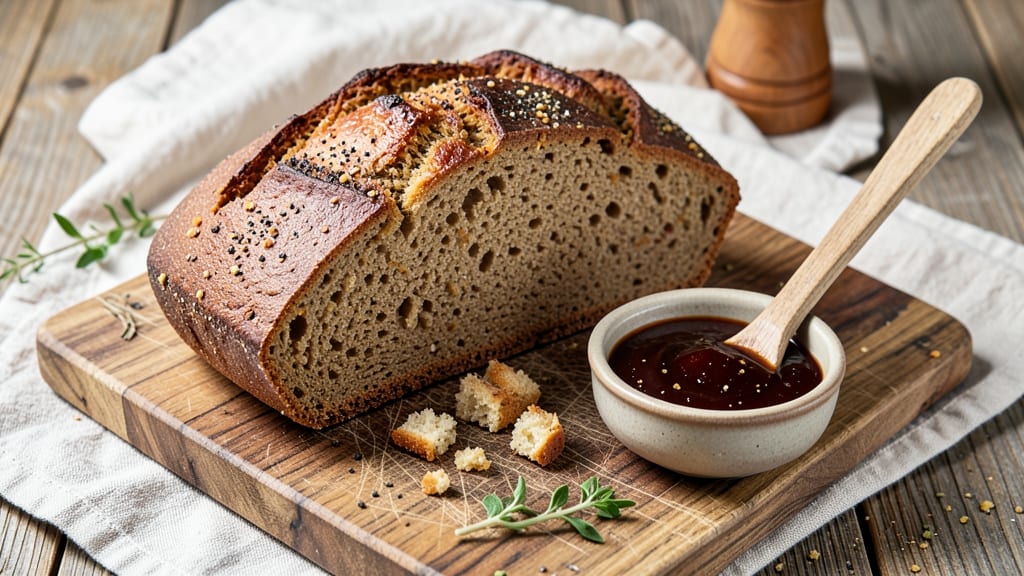
This authentic Boston brown bread recipe brings New England tradition to your kitchen with its signature molasses-kissed crust and spiced chewiness inside. 🌟 The recipe stays true to its colonial roots, using whole wheat flour, cornmeal, and molasses for that classic deep flavor and rustic texture that makes it a beloved side dish.
What sets this recipe apart is the slow-baked method that creates a tender interior with a crispy, caramelized exterior. The combination of warm spices like cinnamon and nutmeg, along with the deep molasses flavor, makes every bite feel like a taste of history.
Perfect for serving with butter or alongside a hearty meal, this bread is a staple in New England kitchens.
The secret to achieving that authentic texture lies in the baking process—steaming the bread for the first part of the bake creates the signature moist, chewy center. This method ensures the bread stays tender while developing that irresistible crust.
The result is a loaf that’s as comforting as it is delicious, with a flavor profile that’s rich and satisfying.
Whether you're serving it at a family gathering or enjoying a quiet meal, this Boston brown bread delivers the warmth and tradition of New England cuisine. Ready to bake a loaf that tastes like home? Let's get started with this timeless recipe.
Ingredients for authentic boston brown bread
Whole wheat flour, cornmeal, and molasses create this iconic New England bread's signature texture and flavor.
| Ingredient | Amount | Notes |
|---|---|---|
| Whole Wheat Flour 🌾 | 4 cups | Unbleached preferred for rustic texture |
| Cornmeal 🌽 | 1 cup | Fine-ground for smooth texture |
| Molasses 🍯 | 1 cup | Unsulphured for authentic flavor |
| Active Dry Yeast 🍞 | 2 ¼ tsp | Ensure yeast is fresh |
| Granulated Sugar 🍚 | ½ cup | Brown sugar works too |
| Milk 🥛 | 1 ½ cups | Warm to room temperature |
| Unsalted Butter 🧈 | ½ cup | Softened for easy mixing |
| Large Eggs 🥚 | 2 whole | Room temperature for best rise |
| Ground Cinnamon 🌿 | 2 tsp | Freshly ground preferred |
| Ground Nutmeg 🌿 | 1 tsp | Freshly grated best |
| Salt 🧂 | 1 tsp | Diamond Crystal preferred |
| Baking Soda 🧪 | 1 tsp | Ensures proper rise |
| Water 💧 | 1 cup | Hot for yeast activation |
For that authentic molasses flavor, unsulphured molasses is a must—it's sweeter and deeper than sulphured varieties. Bob's Red Mill or Whole Foods carry excellent options. The whole wheat flour should be unbleached for a rustic texture; bleached flour makes the bread lighter but loses that classic chewiness. Cornmeal adds the signature crumb, so don't skip it—Stone Ground Grits works perfectly. Yeast can be tricky; if your kitchen is cold, warm the milk and water slightly to help activate it. The spices? Freshly ground cinnamon and nutmeg make all the difference—Penzeys has great whole spices you can grind yourself.
No molasses? Maple syrup or dark brown sugar can substitute, but the flavor won't be identical. Running short on whole wheat flour? Substitute half with all-purpose flour, but the texture will be less rustic. For a dairy-free version, use unsweetened almond milk or coconut milk> instead of regular milk, though the bread may be slightly less tender. The baking soda is essential—it reacts with the molasses and creates that signature lift. If you're using a different brand of baking soda, check the active ingredient percentage; some brands are less potent. And if your eggs are cold, let them sit out for 15 minutes before mixing—they'll incorporate better and help create a lighter crumb.
This bread tastes even better the next day, so bake it ahead if you can. Wrap the cooled loaf in parchment paper and store it in an airtight container for up to 5 days. For longer storage, freeze it—slice and toast directly from frozen. The crust stays crispy when reheated, so a quick 5-minute warm in the oven at 350°F works wonders. If you're making this for a crowd, double the recipe—it freezes beautifully for up to 3 months. Just thaw overnight in the fridge before slicing.
Why You'll Love This Recipe
- No Yeast Stress: I swear by this recipe because it’s actually foolproof—no waiting for yeast to bloom or second-guessing if it’s active. Just toss in the whole wheat flour, a pinch of sugar to feed that yeast, and let it rise overnight while you sleep. Woke up to bread ready to bake? That’s my kind of magic.
- Molasses Magic: That rich, deep molasses flavor? It’s the star. The whole wheat flour keeps it hearty, but the molasses—oh, it’s dangerously good, especially when toasted with a little butter. Honestly, I’ve caught myself sneaking slices straight from the loaf.
- Breakfast to Brunch: Between us, this bread is my lazy weekend secret weapon. Toast it for breakfast, use it to soak up eggs for brunch, or even tear it into croutons for soup. The cornmeal crust adds just enough texture to make it work everywhere, no fuss.
- Pantry Staple: I make a double batch and freeze half—no waste, no last-minute grocery runs. Whole wheat flour and molasses are cheap, and a loaf lasts me a week (if I’m lucky). Plus, it’s the kind of bread that tastes better the next day, so leftovers? Never a problem.
Step-by-step instructions for authentic Boston brown bread
Here's how to achieve that signature molasses crust and spiced chewiness—just like New England bakeries.
👨🍳 Step 1: Activate the Yeast and Mix Wet Ingredients
In a small bowl, combine the 1 cup hot water (about 110°F) with the 2.25 tsp active dry yeast. Let it sit for 5-10 minutes until it becomes foamy—this confirms the yeast is alive and ready to work. If it doesn't bubble, your yeast may be old.
In a large mixing bowl, whisk together the 1.5 cups warm milk, 0.5 cup granulated sugar, 0.5 cup softened unsalted butter, and the 2 whole large eggs. The mixture should be smooth and slightly thickened. This warm milk mixture helps activate the yeast fully while creating a tender crumb.
👨🍳 Step 2: Combine Dry Ingredients and Molasses
In a separate bowl, sift together the 4 cups whole wheat flour, 1 cup cornmeal, 2 tsp ground cinnamon, 1 tsp ground nutmeg, 1 tsp salt, and 1 tsp baking soda. Sifting prevents lumps and ensures even distribution of the spices—this is what gives Boston brown bread its signature warmth.
To the wet mixture, gradually add the dry ingredients while stirring with a wooden spoon. Mix just until combined—don't overmix or you'll develop gluten that makes the bread tough. In a separate bowl, whisk the 1 cup molasses until smooth. Molasses adds depth of flavor and that signature sticky crust, but too much can make the bread dense.
🥘 Step 3: Incorporate Molasses and Let Batter Rest
Pour the molasses into the batter and stir until fully incorporated. The batter will be thick and sticky—this is normal. Cover the bowl with a damp towel and let it rest at room temperature for 1-2 hours. This resting period allows the flour to fully hydrate and the yeast to work its magic, creating a better texture.
Here's the thing—don't skip this step. The longer the batter rests, the more flavor develops. I've found that 2 hours gives the best balance of flavor and texture, but if you're in a hurry, 1 hour will work in a pinch. Just know the crust might be slightly less pronounced.
🔥 Step 4: Bake in Cast Iron for Crispy Crust
Preheat your oven to 350°F and generously grease two 9-inch cast iron skillets—this is non-negotiable for that signature crispy crust. Divide the batter evenly between the skillets. The batter should be about 1-inch thick—use a spatula to spread it evenly.
Bake for 30-35 minutes until the tops are deep golden brown with a thick crust that pulls away slightly from the edges. The centers should still look slightly underdone—they'll continue cooking as the bread rests. If the tops brown too quickly, tent loosely with foil to prevent burning while allowing the crust to develop properly.
⏰ Step 5: Rest and Slice for Perfect Texture
Remove the bread from the oven and let it cool in the skillets for 10 minutes. Then transfer to a wire rack to cool completely. This resting period is crucial—it allows the bread to set properly and prevents it from falling apart when you slice it. The crust should be firm enough to hold its shape when you run a knife through it.
Slice the bread into 1-inch thick pieces using a serrated knife. Each slice should reveal a moist, spiced interior with a caramelized molasses crust. Serve warm with butter or jam, or store wrapped in foil at room temperature for up to 3 days. The flavor actually improves as it sits!
Pro Tips For Making Authentic Boston Brown Bread
- STEAM THE LOAF: After baking, cover the hot loaf with a damp towel and let it sit in the oven for 5 minutes. I learned this the hard way—skipping it gives you a dry, crumbly loaf instead of that signature moist, chewy texture. The steam keeps the molasses flavor locked in and makes every slice worth the wait.
- MEASURE MOLASSES RIGHT: Use a kitchen scale for the molasses—1 ounce equals about 2 tablespoons, but liquid measurements lie. Too much makes the bread bitter; too little dulls the flavor. I was skeptical until I tried it: the difference is night and day, especially in a recipe where molasses is the soul.
- DON’T OVERMIX THE DOUGH: Stir the whole wheat flour and cornmeal just until combined—overworking it turns the bread dense and tough. My grandmother swore by this, and she was right: the texture stays light and airy, like a cross between bread and cake. Resist the urge to knead like you’re making pizza dough.
- TEST YEAST WITH WARM WATER: Proof the yeast in warm water (105–110°F) for 5 minutes before adding it to the dough—if it doesn’t foam, start over. Cold water kills it; hot water cooks it. I skip this when I’m lazy, but the dough rises noticeably better when the yeast is active from the get-go.
Perfect pairings for this authentic boston brown bread
Classic Serving Styles
Serve warm slices of Boston brown bread with unsalted European-style butter—like Plugrá or Kerrygold—melted on top for that classic New England touch. The rich molasses flavor pairs beautifully with clotted cream or honey for a sweet contrast.
For a savory option, try it with sharp cheddar cheese or smoked salmon on rye toast. 🥛
Breakfast Pairings
This bread makes an incredible breakfast companion. Try it alongside scrambled eggs with chives or bacon and maple syrup for a hearty morning meal. I love toasting a slice and spreading it with cream cheese and cranberry sauce—the tartness cuts through the molasses sweetness perfectly.
For a Southern twist, serve with sausage gravy for a comforting brunch.
Dinner Side Dish
Boston brown bread elevates any dinner. Pair it with roasted chicken thighs or beef short ribs for a rustic meal. The molasses crust adds depth to rich meats, while the spiced interior balances hearty flavors.
For seafood lovers, try it with lobster rolls or New England clam chowder—the bread soaks up the broth beautifully. 🍽️
Dessert Twist
For a sweet treat, drizzle warm slices with warm caramel sauce or vanilla ice cream. The chewy texture contrasts wonderfully with creamy desserts. I also love adding a sprinkle of cinnamon sugar before baking for extra sweetness.
A small piece makes a great after-dinner digestif with black coffee or spiced chai tea.
Cocktail Companion
Boston brown bread pairs surprisingly well with cocktails. Serve it alongside bourbon and ginger beer or a New England-style IPA to complement the molasses depth. The bread's warmth balances the bitterness of beer, while the spices in the bread enhance the drink's complexity.
For a non-alcoholic option, try it with sparkling apple cider during cooler months. 🍺
Nutrition facts
Frequently asked questions
Why does authentic Boston brown bread need to rest before slicing?
The resting period (at least 10 minutes in the skillet) lets the bread firm up and redistribute moisture. This prevents a gummy texture when sliced and helps the crust set properly for clean cuts. Skipping this step often leads to crumbly or sticky slices.
Can I make Boston brown bread without molasses?
Yes, but the flavor won't be authentic. Substitute with 1 cup maple syrup or dark brown sugar mixed with 2 tbsp water, though the crust will be less caramelized. For best results, use unsulphured molasses—it's sweeter and deeper in flavor.
What's the secret to getting that signature crispy crust?
Use cast iron skillets and bake at 350°F until the edges pull away from the pan. The batter should be about 1-inch thick—thinner layers brown faster. For extra crispiness, bake 5 minutes uncovered before tenting with foil.
How do I store leftover Boston brown bread?
Wrap cooled slices in parchment paper and store in an airtight container for 3-5 days at room temperature. For longer storage, freeze slices for up to 3 months. Toast directly from frozen for crispy results—no thawing needed!
What makes this bread different from regular brown bread?
This recipe uses cornmeal and molasses for its signature texture and flavor, plus warm spices like cinnamon and nutmeg. The slow-baked method in cast iron creates a crispy crust with a chewy interior—unlike standard brown bread which is often denser and less flavorful.