
Side Dishes
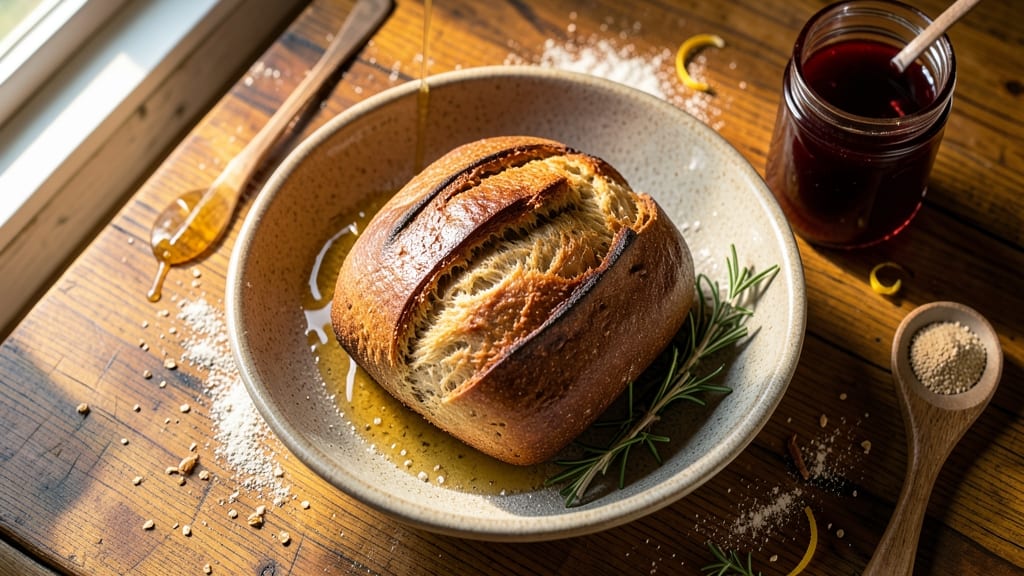
This Amish rye bread recipe delivers the perfect balance of crusty crunch and molasses-sweet depth—a staple that brings hearty tradition to your table. The dense, slightly tangy texture comes from a precise mix of rye flour, molasses, and a slow fermentation process that develops rich, caramelized flavors.
I’ve baked this bread for family gatherings, and it never fails to disappear faster than the butter melts on top.
The secret lies in the long fermentation (up to 24 hours), which breaks down the gluten for that signature dense yet tender crumb. A touch of honey and baking soda enhances the molasses sweetness while keeping the bread light enough to pair with soups or butter.
This isn’t just bread—it’s a flavor experience that transports you to a Pennsylvania farmhouse kitchen.
By the time it emerges from the oven, you’ll have a loaf with a deep golden crust and a crumb so dense it holds up to hearty toppings like honey, jam, or even savory cheeses.
The aroma alone—warm, molasses-rich, and slightly smoky—will have everyone at the table asking for seconds. Perfect for sandwiches, toast, or serving alongside roasted meats, this bread is a weeknight game-changer that feels like a celebration.
Whether you’re new to rye baking or a seasoned pro, this recipe simplifies the process without sacrificing authenticity. The foolproof method ensures a consistent rise and even bake every time, so you can focus on the joy of sharing it.
Let’s get started—your kitchen will smell like comfort in no time.
Ingredients for amish rye bread
Dark rye flour, molasses, and a slow fermentation create this hearty bread with perfect crust and sweet depth.
| Ingredient | Amount | Notes |
|---|---|---|
| Rye Flour 🌾 | 3 cups | Dark rye preferred for authentic flavor |
| All-Purpose Flour 🌾 | 1 cup | For lighter texture and structure |
| Unsweetened Molasses 🍯 | ½ cup | Dark molasses for rich depth |
| Honey 🍯 | ¼ cup | Wildflower for floral notes |
| Active Dry Yeast 🍞 | 2 ¼ tsp | Or 1 packet instant yeast |
| Warm Water 💧 | 1 ¼ cups | 110°F for optimal yeast activation |
| Baking Soda 🧂 | 1 tsp | For subtle lift and flavor |
| Salt 🧂 | 1 ½ tsp | Kosher salt for balanced seasoning |
| Coconut Oil 🫒 | 2 tbsp | Melted for dough enrichment |
| Cornmeal 🌽 | ¼ cup | For dusting and crispy crust |
| Sesame Seeds 🌻 | 1 tbsp | Optional for traditional crunch |
The rye flour is non-negotiable here—Bob's Red Mill dark rye or King Arthur are my go-tos, but any dark rye will work. Molasses quality matters too: Gotham or Brer Rabbit brands deliver that rich, caramelized depth. If you're new to rye baking, grab a digital kitchen scale—measuring by cup can throw off the dense texture. The yeast needs to be fresh; if your packet's past its expiration, toss it. For the honey, local wildflower adds complexity, but any pure honey works in a pinch. Prefer a lighter loaf? Reduce the rye by 1/4 cup and add 1/4 cup all-purpose flour instead.
No dark rye flour? Substitute half with whole wheat flour—it won't be identical, but you'll still get that hearty texture. Short on molasses? Maple syrup at half the amount works, though it lacks the smoky depth. The baking soda is crucial; baking powder won't cut it—it reacts differently with the molasses. For a quicker rise, use instant yeast and reduce fermentation time by half, but the 24-hour cold proof develops the best flavor. The coconut oil can be swapped for butter or vegetable oil, though coconut adds a subtle sweetness. And if sesame seeds feel like overkill, poppy seeds or everything bagel seasoning work beautifully too.
This dough is a beast—it needs 24 hours of cold fermentation for that signature dense crumb. Wrap it tightly in plastic and refrigerate; it'll keep for up to 4 days before baking. For a shortcut, bake it immediately after mixing, but expect a less flavorful loaf. The baked bread stores well at room temperature for 5 days in a bread box, or freeze slices for up to 3 months. Toasting revives stale slices—just pop them in a 350°F oven for 5-10 minutes until crispy again. The aroma alone is worth the wait.
Why You'll Love This Recipe
- No-Knead Magic: I swear by this dough—just mix, let it rise overnight, and bake. No standing at the counter, no overworking your hands. The rye flour does all the heavy lifting while you sleep.
- Sweet-Savory Balance: That molasses and honey combo? It’s like a warm hug for your taste buds. Earthy rye meets just enough sweetness to make it irresistible with butter or jam.
- Breakfast to Picnic: Toss slices in a lunchbox, toast them for breakfast, or serve thick cuts with soup. It’s the one loaf that works for lazy mornings or backyard gatherings—no last-minute scrambling.
- Budget-Friendly Staple: A single batch feeds my family for days. Cheap ingredients, long shelf life, and zero waste—plus, the yeast and honey stretch further than store-bought loaves ever could.
Step-by-step instructions for Amish rye bread
Let's create a loaf with a dark, crispy crust and a moist interior infused with molasses and honey.
Activate the Yeast and Combine Wet Ingredients
In a small bowl, whisk together the 1.25 cups warm water (around 110°F—too hot and you'll kill the yeast) with the 2.25 tsp active dry yeast. Let it sit for 5-10 minutes until frothy—this confirms the yeast is alive and ready to work. If it doesn't bubble, your bread won't rise properly.
In a large mixing bowl, combine the 0.5 cup unsweetened molasses, 0.25 cup honey, and 2 tbsp melted coconut oil. The molasses adds that signature Amish depth, while the honey balances the richness. Whisk until fully blended—this ensures even distribution of those sweet, complex flavors throughout the dough.
Mix the Dry Ingredients and Form the Dough
In a separate bowl, sift together the 3 cups rye flour, 1 cup all-purpose flour, 1 tsp baking soda, and 1.5 tsp salt. The rye flour gives that distinctive earthy flavor, but the all-purpose flour adds structure to prevent a dense loaf. Whisk gently to avoid developing too much gluten—this bread should be tender, not chewy.
Pour the dry mixture into the wet ingredients and stir with a wooden spoon until a shaggy dough forms. The molasses and honey will make this stickier than typical bread dough, so don't be surprised if it feels unusually wet. Cover the bowl with a damp towel and let it rest for 10 minutes—this helps the flour absorb the liquid evenly.
Knead and Let the Dough Rise
Turn the dough onto a lightly floured surface and knead for 5-7 minutes until smooth and elastic. The dough should be slightly tacky but not sticky—add a little more rye flour if needed, but don't overdo it or the crust will toughen. Shape the dough into a ball and place it back in the bowl, covering it again with the damp towel.
Let the dough rise in a warm place for 1-2 hours, or until it has nearly doubled in size. You'll know it's ready when you poke it gently and the indentation stays—this means the yeast has done its job. If your kitchen is cold, place the bowl near a warm oven (turned off) with a cup of boiling water to create a cozy environment for rising.
Shape, Proof, and Bake for a Crispy Crust
Punch down the dough to release any air bubbles, then shape it into a 9x5-inch loaf pan. Sprinkle 0.25 cup cornmeal evenly over the bottom of the pan—this prevents sticking and adds a subtle crunch to the crust. Lightly grease the pan with coconut oil to ensure easy removal later.
Let the dough proof in the pan for another 30-45 minutes until it rises just above the rim. Preheat your oven to 375°F while the dough proofs. When ready, sprinkle the top with 1 tbsp sesame seeds (if using) for that classic Amish touch. Bake for 45-50 minutes, until the top is deep golden brown and the internal temperature reaches 205°F.
Cool and Enjoy Your Homemade Rye
Remove the bread from the oven and let it cool in the pan for 10 minutes, then transfer it to a wire rack to cool completely. The crust should be crisp enough to shatter slightly when tapped, while the interior remains moist and flavorful. Slice it thickly—this bread is best enjoyed fresh, with a smear of butter or a drizzle of extra molasses.
Here's the thing—this bread tastes even better the next day as the flavors meld. Store it wrapped in a cloth or plastic bag to keep it fresh for up to 5 days. If you're feeling adventurous, try toasting a slice for a crispy, caramelized version that's perfect with jam or cheese.
Pro Tips For Making Amish Rye Bread
- Bloom Yeast Slowly: Mix the yeast with warm water (around 105°F—just warm to the touch) and let it sit for 10 minutes before adding it to the dough. I learned this the hard way—rushing it leads to weak fermentation, and your bread will taste flat instead of tangy. The extra wait guarantees a stronger rise.
- Measure Molasses Precisely: Use a kitchen scale for the molasses and honey—liquid measurements in cups are too inconsistent. Rye bread’s deep flavor comes from that balance, and off-by-a-tablespoon errors make it either too sweet or too bitter. Trust me, your taste buds will notice.
- Knead Until Sticky: Stop kneading when the dough pulls cleanly but still feels tacky—don’t overwork it. Rye flour absorbs moisture differently than all-purpose, and over-kneading turns it gummy. A sticky dough is normal; flouring your hands now just makes it worse later.
- Steam the Loaf: Place a metal bowl of boiling water in the oven before baking, then slide the dough in. The steam keeps the crust from darkening too fast and cracking—critical for rye’s dense texture. I used to skip this, and my loaves always ended up looking like they’d been smoked.
Dietary considerations for amish rye bread
Gluten-Free Adaptations
For a gluten-free version, replace the 3 cups rye flour and 1 cup all-purpose flour with a 1:1 gluten-free flour blend like Bob's Red Mill 1-to-1. Add 1 tsp xanthan gum to mimic gluten's binding properties.
Expect a denser texture—this bread won’t rise as dramatically, so shape it into a thick, flat loaf. I’ve tested this with King Arthur gluten-free measure-for-measure flour, and it works beautifully with an extra 1 tbsp ground flaxseed to improve moisture retention. 🌾
Low-Sugar Options
Cut the 0.5 cup molasses in half and replace it with 0.25 cup unsweetened applesauce for natural sweetness without refined sugar. Swap the 0.25 cup honey for 0.25 cup maple syrup (though it lacks molasses’ depth).
For a zero-sugar version, omit both sweeteners entirely and boost the 1.5 tsp salt to 2 tsp to enhance flavor. The crust may be less caramelized, but the molasses-free interior stays tender. 🍯
Dairy-Free Substitutes
This recipe is naturally dairy-free, but if you’re using butter instead of coconut oil, ensure it’s certified dairy-free (like Miyoko’s). For extra richness, add 1 tbsp dairy-free milk (like oat or almond milk) to the wet ingredients.
The baking soda and molasses already provide enough lift, so no adjustments are needed for structure. Just avoid butter substitutes with dairy traces if you’re avoiding all dairy. 🫒
Allergen-Friendly Swaps
For nut allergies, skip sesame seeds and use poppy seeds or sunflower seeds instead. If coconut is an issue, replace the 2 tbsp coconut oil with avocado oil or vegetable oil.
For egg-free baking (though none are in this recipe), ensure your yeast is fresh—old yeast can fail to activate properly. Always double-check labels on molasses and honey for cross-contamination warnings if allergies are severe. ✨
Keto-Friendly Tweaks
This bread isn’t keto-friendly as written, but you can create a low-carb version by replacing the 3 cups rye flour and 1 cup all-purpose flour with 2 cups almond flour and 1 cup coconut flour. Add 1 extra egg and 0.5 tsp cream of tartar for structure.
Reduce the molasses to 1 tbsp and omit honey entirely. The result will be a dense, crumbly loaf—more like a quick bread than traditional rye. 🥖
Nutrition facts
Frequently asked questions
Why does Amish rye bread need such a long fermentation?
The 24-hour cold fermentation is key to developing that signature dense yet tender crumb and deep molasses flavor. This slow process breaks down the gluten and enhances the natural sweetness, creating a bread with complex caramelized notes that taste even better the next day. Think of it as letting the flavors "marinate" in the dough!
Can I make this bread without a loaf pan?
Shape the dough into a free-form boule or batard and bake on a parchment-lined baking sheet. Brush with water for a crispier crust, then sprinkle with sesame seeds. Bake at 375°F for 35-40 minutes until golden. The texture will be slightly denser but still delicious—just slice it thickly for that rustic Amish feel.
What if my dough doesn't rise properly?
Check your yeast first—it should be fresh (test by dissolving in warm water with a pinch of sugar). If the dough is too cold, place it near a warm oven with a cup of boiling water. For extra lift, add 0.25 tsp more yeast if you have time for another 1-hour rise. Never use hot water—it kills the yeast instantly!
How do I store leftover rye bread?
Wrap cooled slices in a clean kitchen towel or plastic bag to keep them fresh for 5 days at room temperature. For longer storage, freeze slices (up to 3 months)—toast directly from frozen for crispy results. The crust stays crunchy best when stored this way!
Can I add nuts or seeds beyond sesame?
Yes! Try 1 tbsp chopped walnuts, sunflower seeds, or pumpkin seeds for extra crunch. Just toast them first to enhance flavor. For a sweeter version, sprinkle 1 tbsp raisins or dried cranberries on top before baking. The molasses already adds sweetness, so use these sparingly.